
FBOFBO · Explainer
What an FBO Is and Why It Shapes Your Trip
The fixed base operator is the private terminal, the ramp crew, the fuel and the hangar in one. What it does for passengers, crew and aircraft, and why the choice of FBO matters.
4 min readRolavia editors
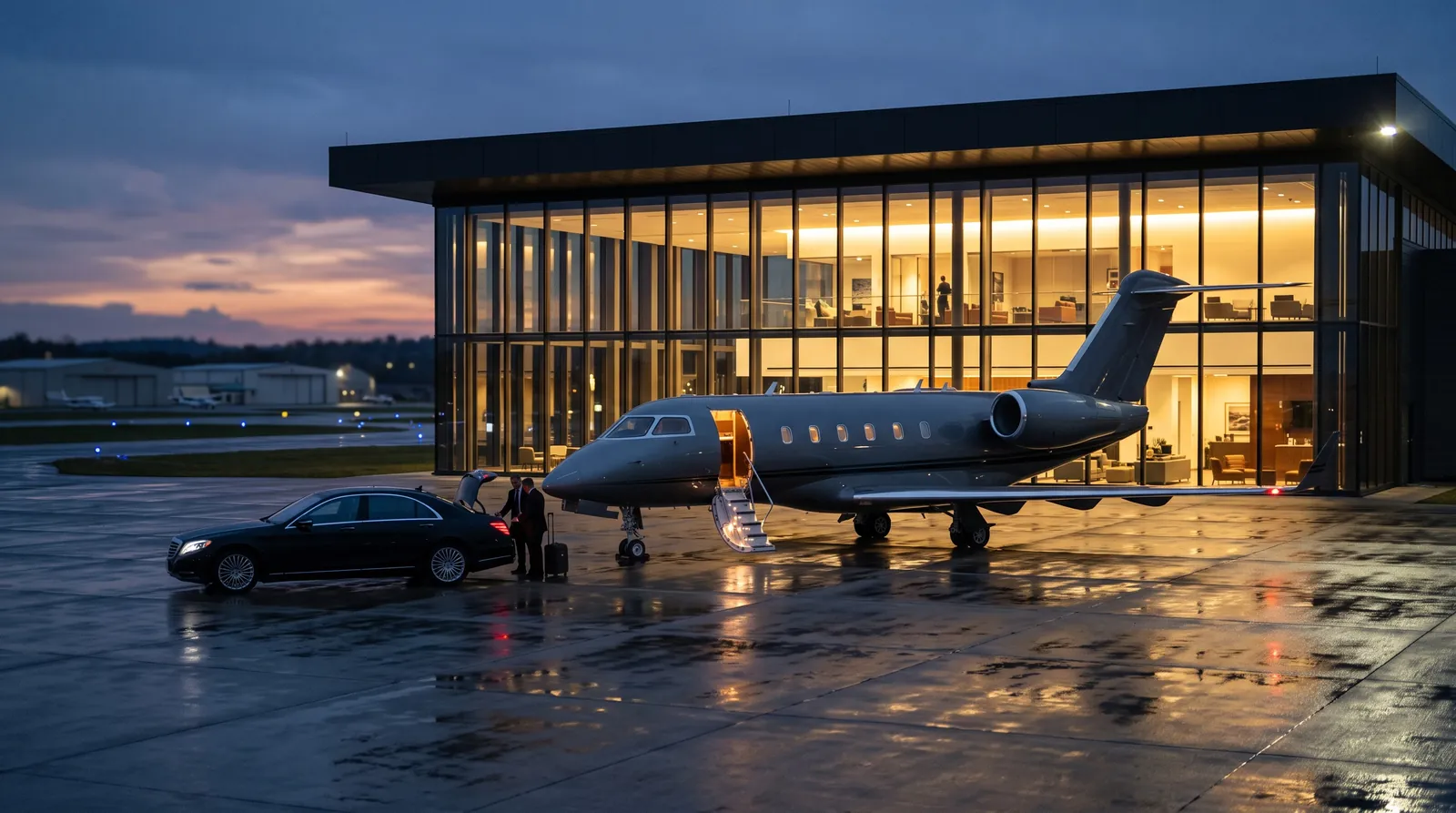
An FBO, short for fixed base operator, is the company at an airport that looks after private and business aircraft, their crews and their passengers. For the traveller it is the private terminal: the quiet lounge, the short walk or drive to the aircraft, the link to customs and the car waiting at the steps. For the crew and the aircraft it is everything else on the ground: marshalling, fuel, hangar space, catering, flight planning, a place to rest. A good FBO makes the airport part of a private trip take minutes. A poor one can make it the slowest part of the day.
Where the name comes from
The term goes back to the early years of American aviation, when it distinguished businesses with a permanent base at an airfield, selling fuel, maintenance and flights, from itinerant fliers moving from field to field. In the United States, FBOs still typically lease land and buildings from the airport authority and hold the right to sell fuel there. The word has since spread worldwide, although in Europe you will also hear handling agent, ground handler or GAT, for general aviation terminal.
What an FBO does for passengers
- A private lounge, often with meeting rooms, quiet rooms, Wi-Fi and washrooms, away from the airline terminal.
- Coordination of passport, immigration and customs checks, either with officers who come to the FBO or with an escorted walk through the airport's own border facilities.
- Security screening where the airport or the operator requires it.
- Baggage handling between the car, the terminal and the aircraft hold.
- Access for cars to the aircraft where the airport allows it, or a short transfer by FBO vehicle.
- Concierge help: hotel cars, flowers, newspapers, a forgotten charger, a restaurant booking at the destination.
What it does for the crew and the aircraft
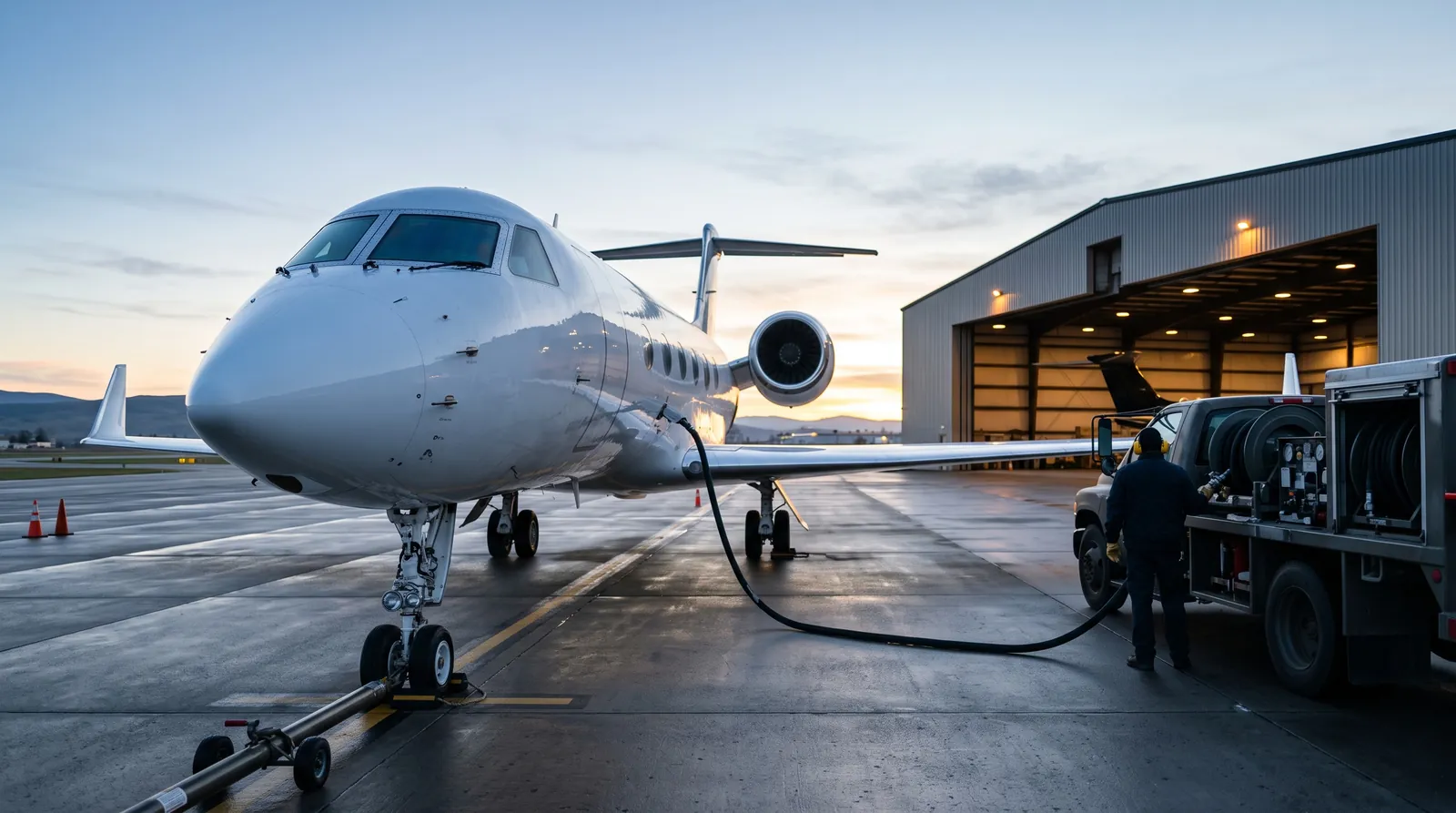
Most of an FBO's work is invisible to passengers. The ramp team marshals the aircraft in, places chocks and cones, connects ground power and arranges the fuel truck. Lavatory service, potable water, cleaning and de-icing are booked through the FBO. Catering is ordered from specialist kitchens and delivered to the aircraft. Crews get a planning room, weather and briefing facilities, a rest area, often showers and a crew car or transport to their hotel. For an overnight stop, the FBO arranges parking on the apron or space in a hangar, which matters in winter frost and summer heat alike.
FBO, handler or GAT: the European picture
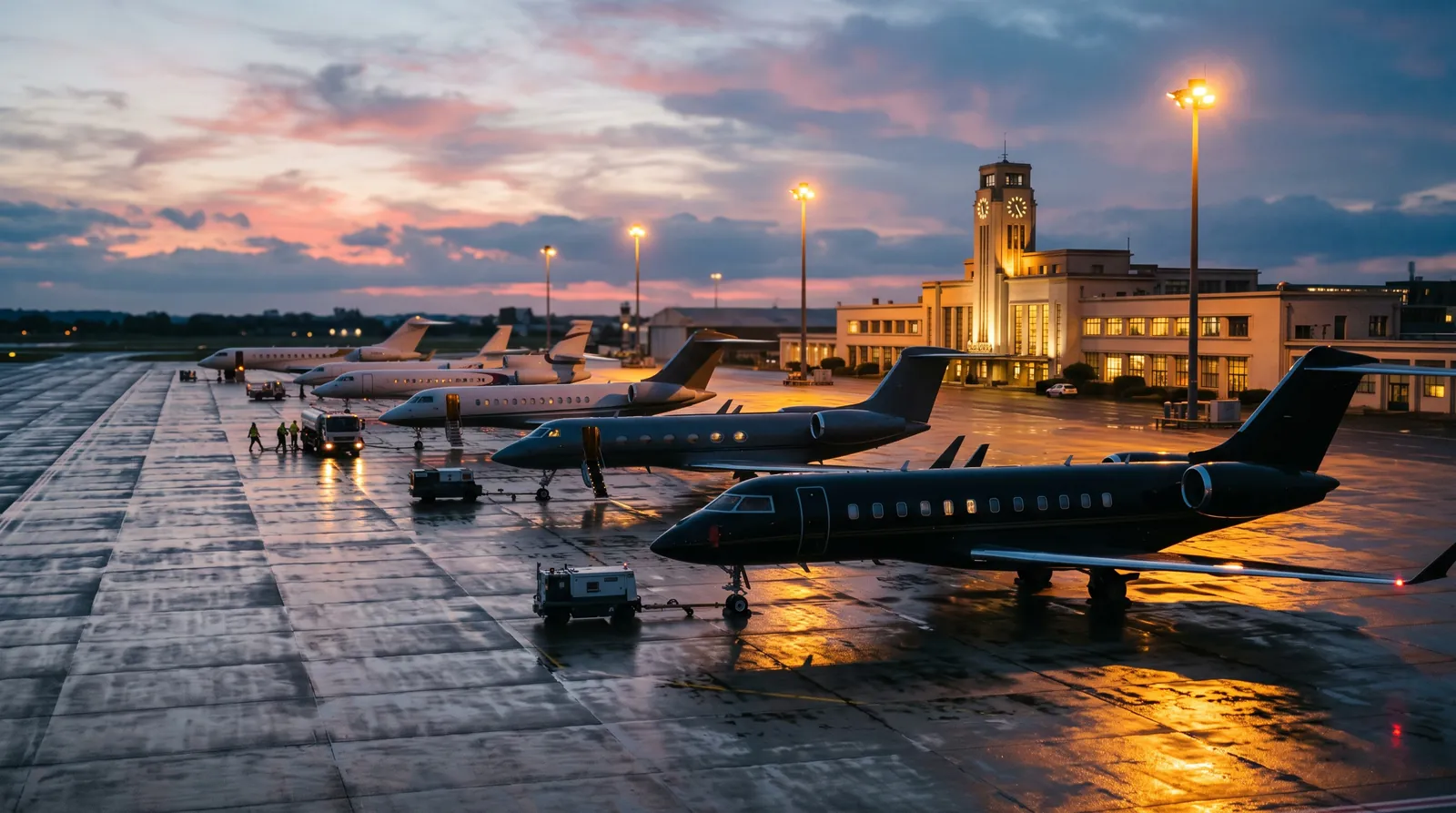
The American model of competing FBOs, each with its own building, ramp and fuel concession, exists in Europe mainly at the busiest business aviation airports. Paris Le Bourget, for example, has several FBOs side by side, as described in Paris Le Bourget: Europe's Business Aviation Capital. At many other airports there is a single general aviation terminal, run by the airport or a concessionaire, and one or two licensed handling agents. Some handlers own their equipment and staff; others act as supervisors, booking the ramp services, fuel and border officers that the airport provides. At larger EU airports, access to the ground handling market is regulated, and the number of providers for some ramp services can be limited. Fuel in Europe is often supplied into the aircraft by a separate fuel company rather than the FBO itself.
For a passenger, the label matters less than the result. Whether the sign says FBO, handling or GAT, the questions are the same: how quickly can you get from the car to the aircraft, how close can the car get, and who deals with the border formalities.
Why the choice of FBO matters
At an airport with several FBOs, the difference between them can be considerable. Location on the field affects taxi times and how far the car has to drive. Some FBOs have customs and immigration officers on call around the clock, others share them with the main terminal and wait their turn. Hangar space is finite, especially in ski season, and the FBO that has it decides whether an aircraft sits in the snow overnight. Fees differ too, as explained in FBO Fees Decoded: Handling, Parking and Fuel.
The quality signs that set the best apart are collected in What Makes a Great FBO, and the passenger side of the visit, from documents to pets, in Arriving at an FBO: Documents, Pets and Timing.
Questions
What does FBO stand for in aviation?
FBO stands for fixed base operator. It is the company at an airport that provides services for private and business aircraft, including a passenger lounge, ramp handling, fuel, hangar space, catering coordination and crew facilities.
Is an FBO the same as a private terminal?
For passengers, largely yes: the FBO building is the private terminal you arrive at and depart from. But the FBO also handles the aircraft and the crew, from fuel and parking to flight planning and de-icing, which a terminal alone would not do.
Who chooses the FBO for a private flight?
Usually the aircraft operator or the flight department, based on handling agreements, fuel contracts and experience. Passengers can ask for a particular FBO, which is worth doing at airports with several, for example to be closer to the onward car route.
Figures checked 19 October 2026. Prices are indicative and never a quote. Seen something out of date? Tell the editors.