
INTJet Interiors · Explainer
Inside a Cabin Completion: From Green Aircraft to Delivery
How a green aircraft becomes a finished cabin: who does the work, the design and certification phases, flammability rules, the weight budget, realistic timelines and what owners decide.
4 min readRolavia editors
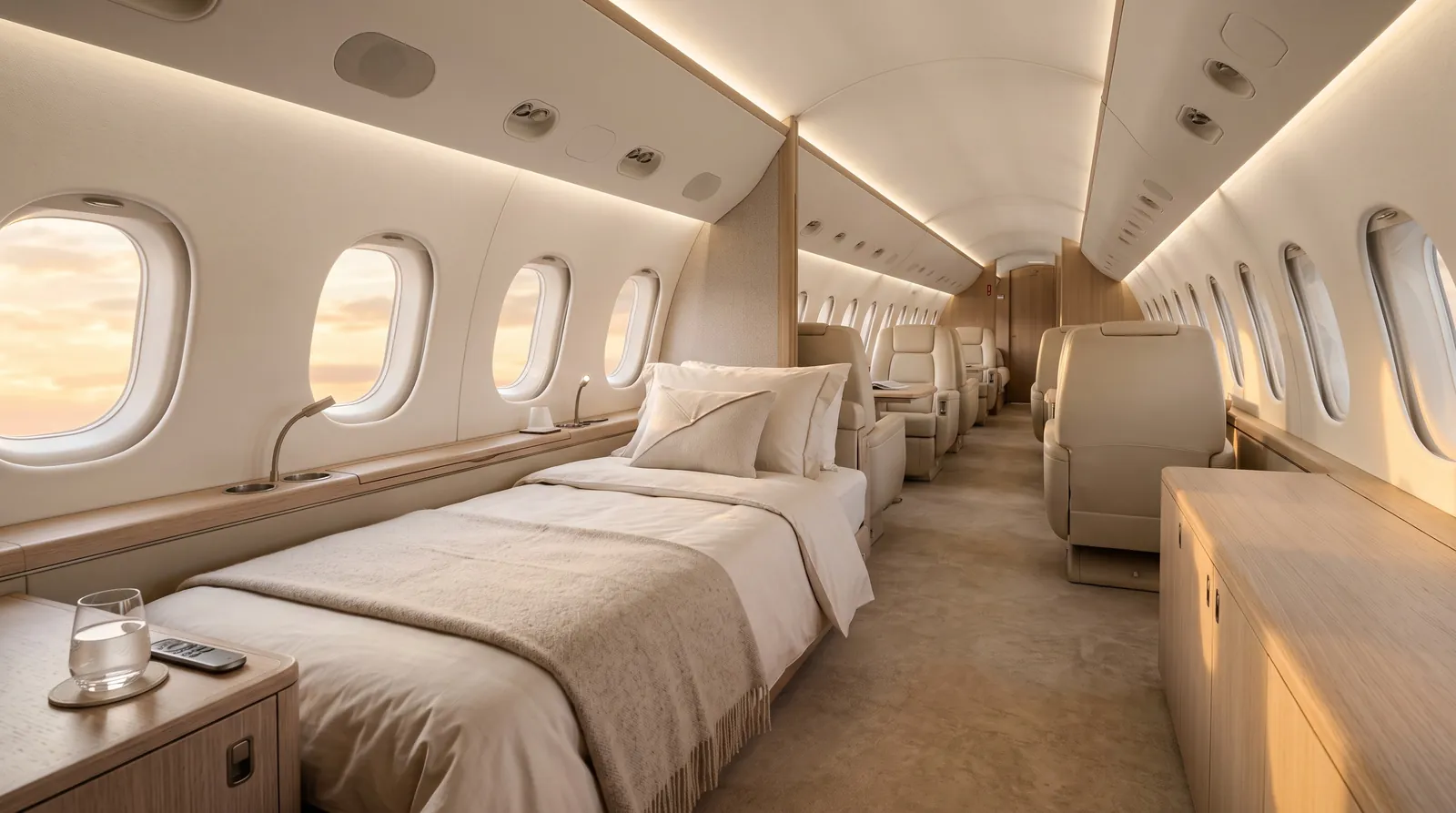
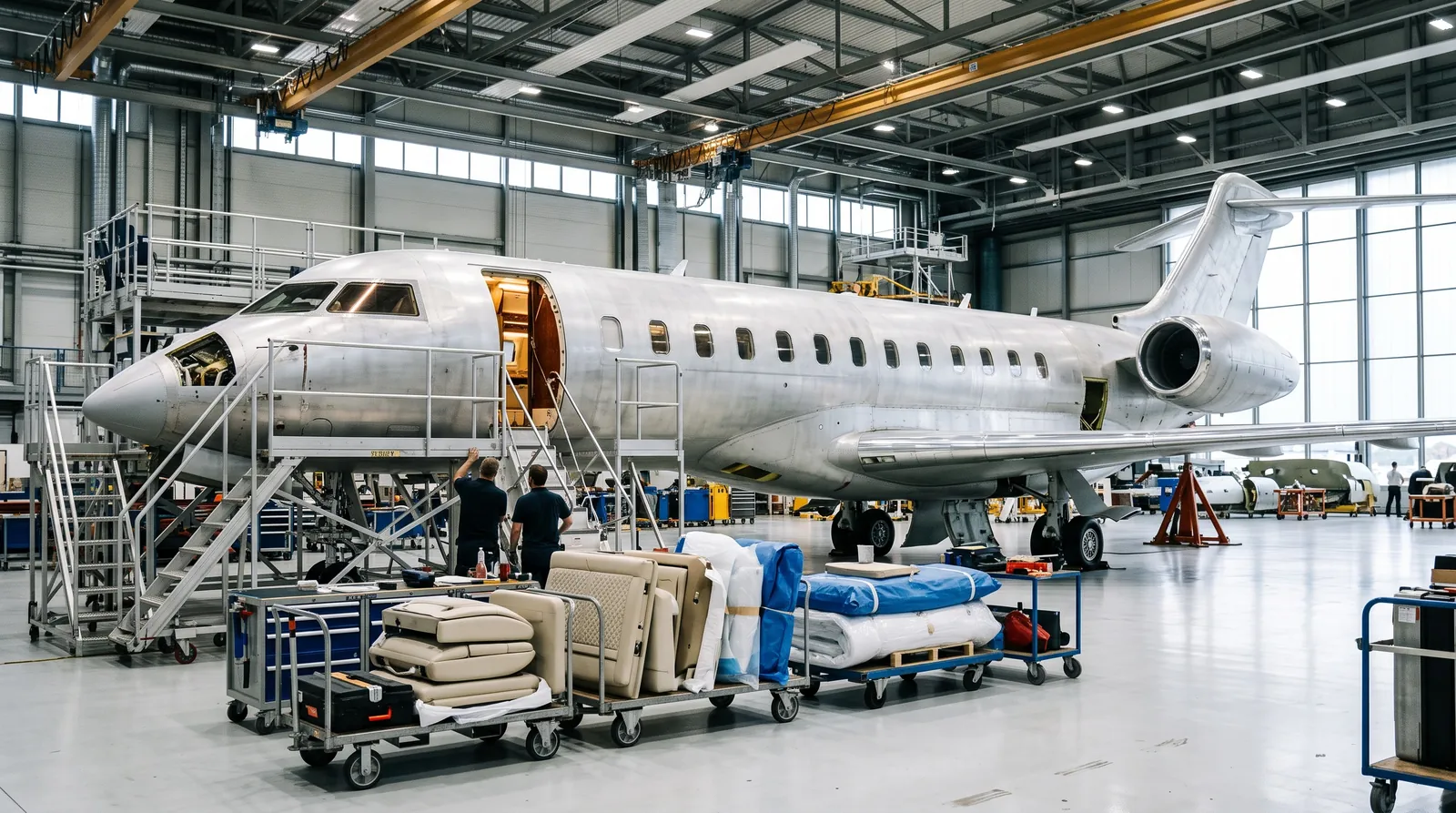
A completion turns a green aircraft into a finished cabin. The green aircraft is a certified, flyable airframe with engines, systems and avionics but no interior, traditionally named after the green-tinted primer on its bare structure. For most business jets, the manufacturer completes the aircraft in its own facility from a wide menu of layouts and finishes. For corporate airliners and for major refurbishments, an independent completion centre designs, engineers, builds and certifies a bespoke interior. Either way, the important decisions are made months before anyone sees the result.
Who does the work
- Manufacturers. Gulfstream, Bombardier, Dassault, Embraer and Textron complete their business jets in house. The owner chooses a floor plan, materials, colours and options with the manufacturer's design team.
- Independent completion centres. Corporate versions of Airbus and Boeing airliners are usually delivered green and completed by specialists such as Lufthansa Technik in Hamburg, AMAC Aerospace and Jet Aviation in Basel or Comlux in Indianapolis. These centres also handle refurbishments of existing jets.
- Designers. Independent studios sometimes create the concept, working with the completion centre's own engineers.
- Owner's representative. On large projects, an experienced completion manager watches cost, weight and schedule on the owner's behalf.
The certification design work is done by an organisation approved by the authority for that purpose, and a bespoke interior is typically approved as a supplemental type certificate.
The phases
- Specification and contract. Layout, systems, weight target, schedule, price and, crucially, the process and cost of later changes.
- Design. Concept, then a preliminary design review, then a critical design review, after which the design is frozen.
- Engineering. Structural analysis of every attachment, electrical loads, emergency lighting, exits and evacuation paths, and the test plan for certification.
- Manufacture. Monuments (the trade term for galleys, lavatories, closets, credenzas and bulkheads), seats and soft furnishings are built in parallel.
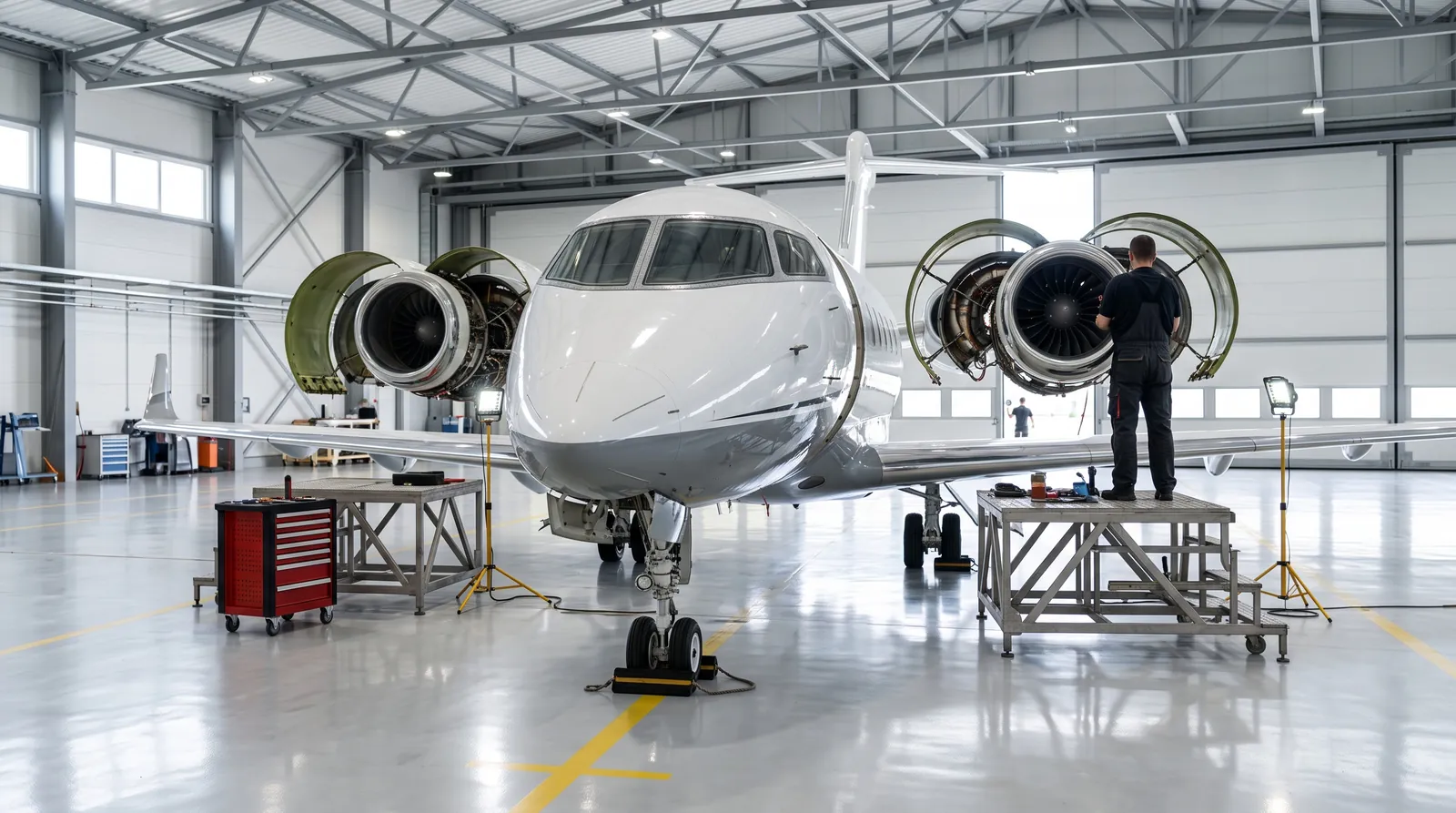
- Installation. The aircraft is inducted, wired and fitted with the cabin, cabin management, entertainment and connectivity systems.
- Testing and certification. Ground tests, flight tests and the final approval of the interior.
- Delivery. Acceptance flight, a final list of snags to close and the complete documentation and records.
Certification: why every material is tested
Fire is the hazard the rules are written around. Under the transport category requirements that apply to most larger business jets, every interior material, including finishes and decorative surfaces, must pass flame tests. Seat cushions face an additional, tougher test. In aircraft with 20 or more passenger seats, ceiling and wall panels, partitions, galley structure and large cabinets must also meet limits on heat release and smoke. A beautiful leather, lacquer or textile that fails these tests cannot be used, or has to be treated and retested.
Fire is not the only constraint. Monuments must stay attached under emergency landing loads, which reach nine times the force of gravity in the forward direction. Seats are certified through dynamic crash tests, and side-facing seats bring extra requirements. Smaller jets certified under the normal category rules follow their own set of comparable standards.
Weight, the silent constraint
Every kilogram of interior reduces payload or fuel, and therefore range. Stone, solid wood, large screens, heavy galley equipment and showers with their water tanks all add up. Completion contracts usually set a target weight, and good completion teams report against it throughout the project. Owners who understand the trade early make better choices, such as a thin stone veneer instead of a heavier slab, or a smaller screen in a zone where it is rarely watched.
How long it takes
For a business jet completed by its manufacturer, the interior is part of the production flow, and the owner's main choices are made well ahead of the delivery slot. For a corporate airliner, an independent completion of a narrow-body aircraft commonly takes around a year, while a widebody often takes 18 months to two years or more, depending on scope. The most common cause of delay is not engineering but late change: a decision revisited after the design freeze ripples through drawings, parts, tests and certification.
What owners decide
- The mission: how many passengers, how long the longest flights are, and how many must be able to sleep.
- The zones, and which seats are certified for take-off and landing.
- Galley equipment, lavatories, a shower on the largest aircraft and a crew rest for very long sectors.
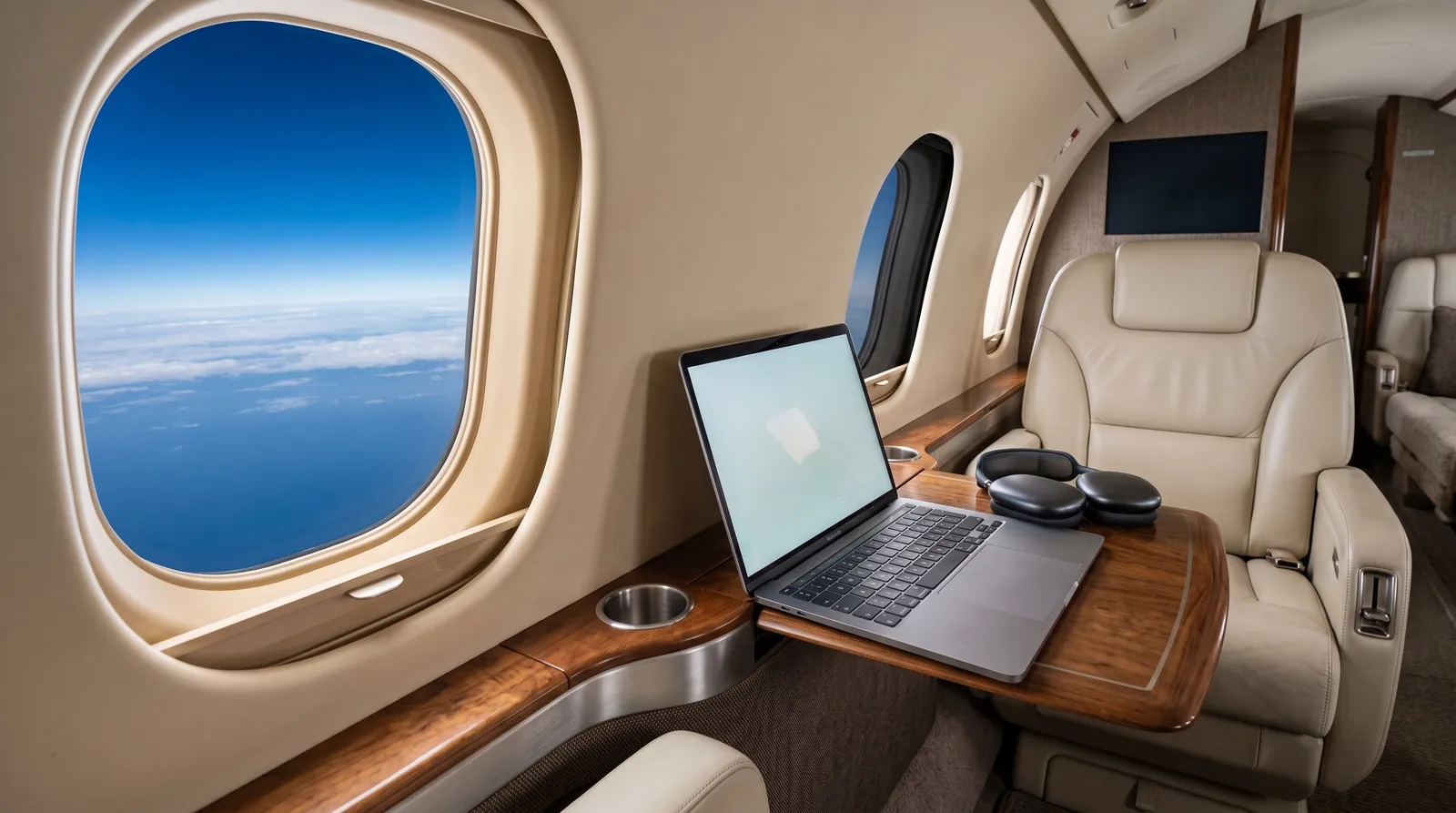
- Connectivity, entertainment and the cabin management system; see our guide to Wi-Fi at altitude.
- Materials, colours, lighting and soft goods, with weight in mind.
- How personal to go: a very individual interior can narrow the market at resale, a point covered in our guide to buying a pre-owned jet.
For the design direction many owners are choosing now, see cabin design trends.
Questions
What is a green aircraft?
A green aircraft is a certified, flyable airframe with engines, systems and avionics but without a finished cabin. The name traditionally comes from the green-tinted primer on the bare structure. It is flown to a completion centre, where the interior is designed, built, installed and certified.
How long does a private jet cabin completion take?
For a business jet completed by its manufacturer, the interior is built into the production schedule. An independent completion of a corporate airliner commonly takes around a year for a narrow-body and often 18 months to two years or more for a widebody, with late design changes the main cause of delay.
Why do cabin materials need to be certified?
Because fire in a sealed cabin is a serious hazard. Aviation rules require interior materials to pass flame tests, with extra heat release and smoke limits for larger cabins, and furniture and seats must also stay in place under emergency landing loads.
Figures checked 19 October 2026. Prices are indicative and never a quote. Seen something out of date? Tell the editors.