
INTJet Interiors · Background
Cabin Design Now: Light, Materials and Quiet
How today's business jet cabins are designed: lighting that follows the body clock, bigger windows, quieter cabins, real beds, larger galleys and lighter, more natural materials.
4 min readRolavia editors
The large cabins being delivered now are designed less to impress on the ramp and more around how a passenger feels after eight or twelve hours in the air. The themes are consistent across manufacturers: lighting that follows the body clock, more daylight, less noise, proper places to sleep, galleys that let a crew cook rather than simply reheat, and materials that look natural while weighing as little as possible. None of this is futuristic. It is what owners are specifying today.
Light that follows the body clock
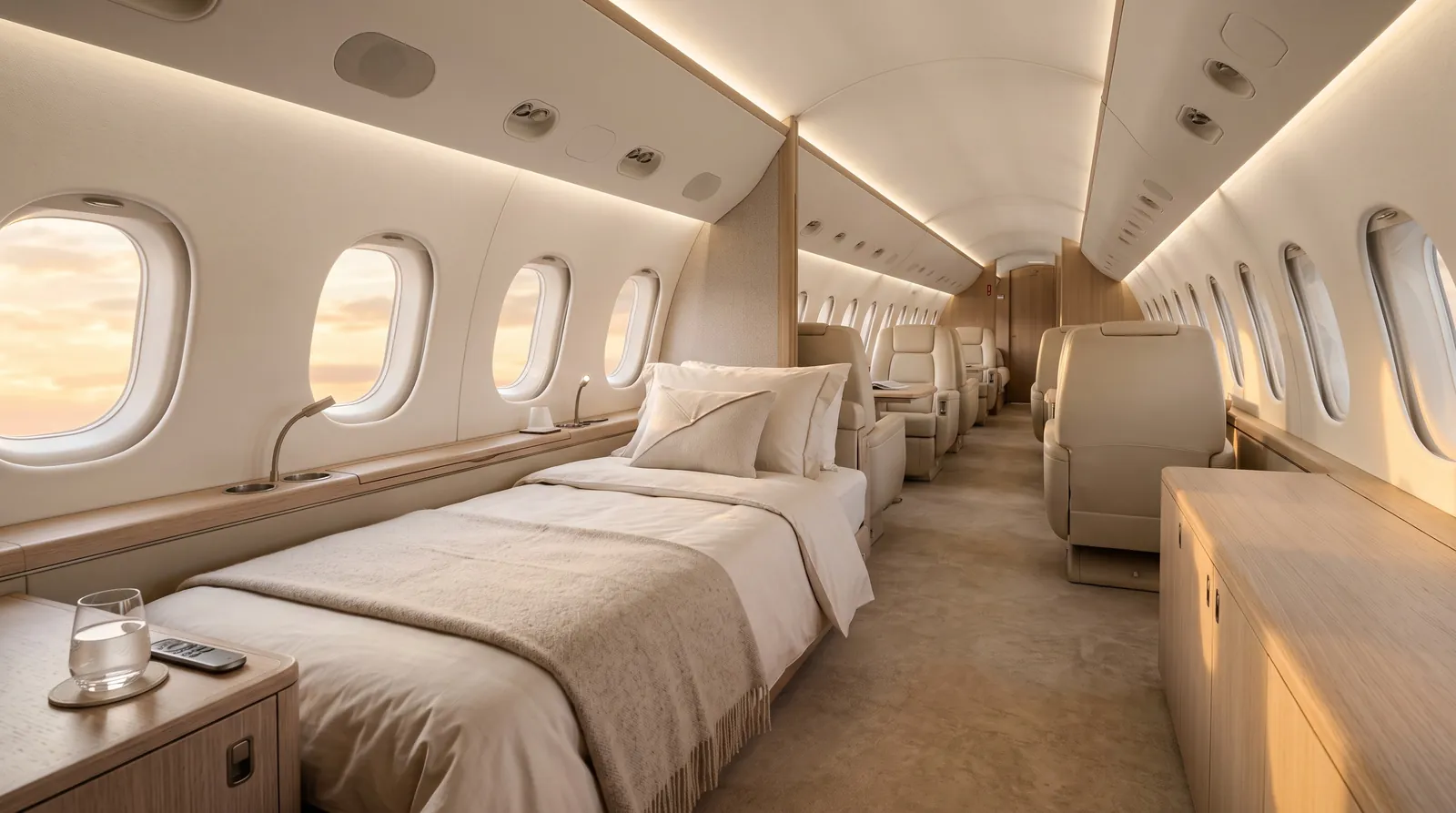
Circadian lighting uses LEDs that shift colour temperature and brightness through the flight, from warm amber at dawn and dusk to cooler, brighter light during the day. Bombardier describes its Soleil system on the Global family as cabin lighting integrated with the flight management system, so the light can follow the time at the destination. Gulfstream fits circadian lighting in its large-cabin jets, including the G700. Light is one of the strongest signals the body clock responds to, so this is a sensible tool on long flights. It helps, but no lighting system cures jet lag on its own, as our article on cabin altitude and jet lag explains.
Windows and daylight
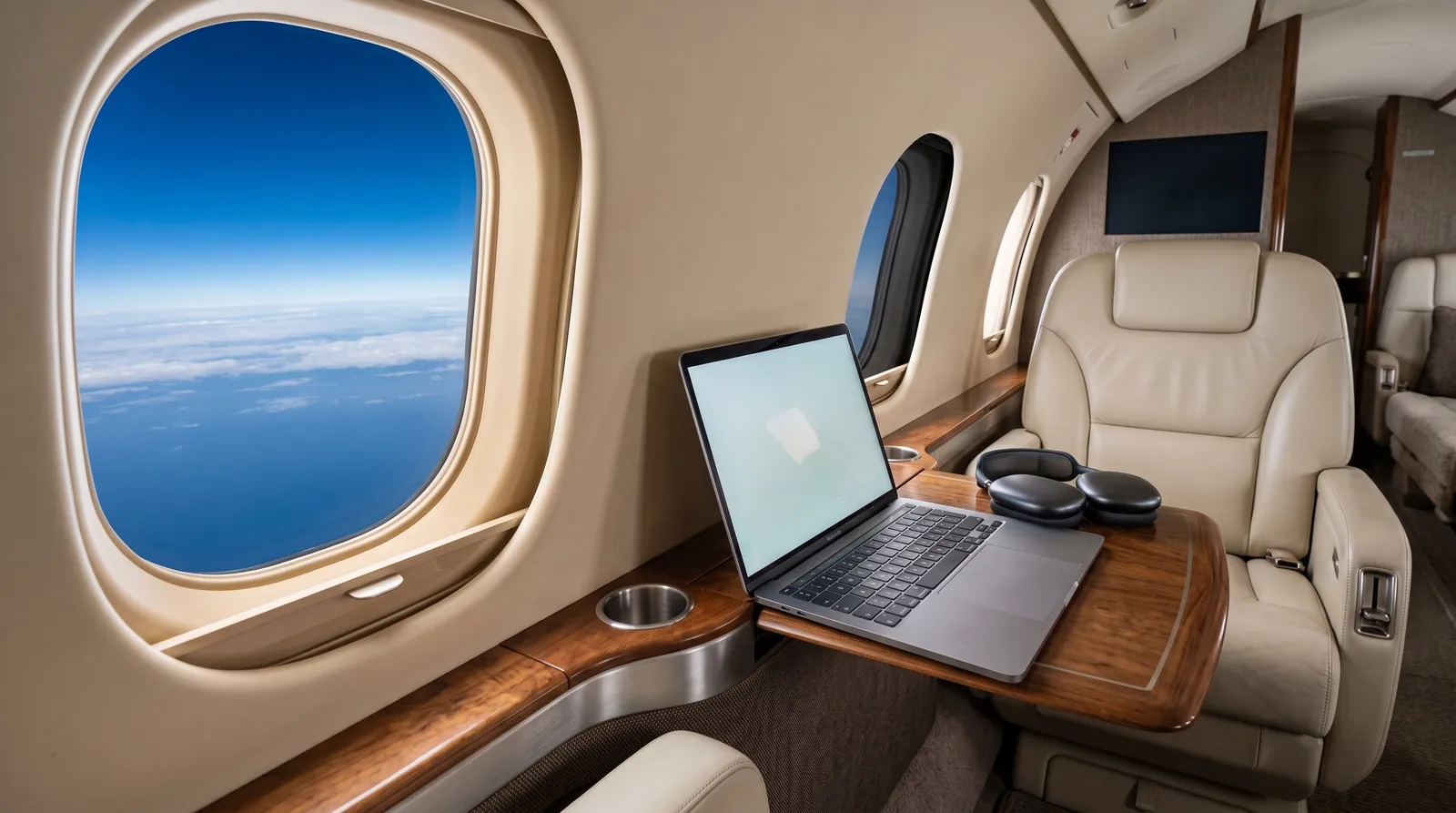
Window size has become a selling point. Gulfstream's G700 has 20 of its panoramic oval windows, and Dassault gives the Falcon 6X 30 extra-large windows plus a skylight. More daylight makes a cabin feel larger and helps passengers stay oriented to the time of day. The counterpart is good shading: electrically operated blinds that a passenger or the cabin management system can close for sleep or for a screen presentation. If you are comparing aircraft, our G700 profile and our Falcon 6X profile show the cabins in context.
Quiet as a design target
Cabin noise comes from the engines, the airflow around the fuselage and the air conditioning. Designers attack all three with insulation, careful sealing, flexible mounts that stop furniture from transmitting vibration and slower, quieter air outlets. A quiet cabin makes conversation easier at normal volume and reduces fatigue on a long day. Manufacturers do publish sound levels, but they measure at different points in the cabin, at different altitudes and with different methods. Compare figures only when they were measured the same way, and trust a long flight more than a brochure.
Seats, divans and beds
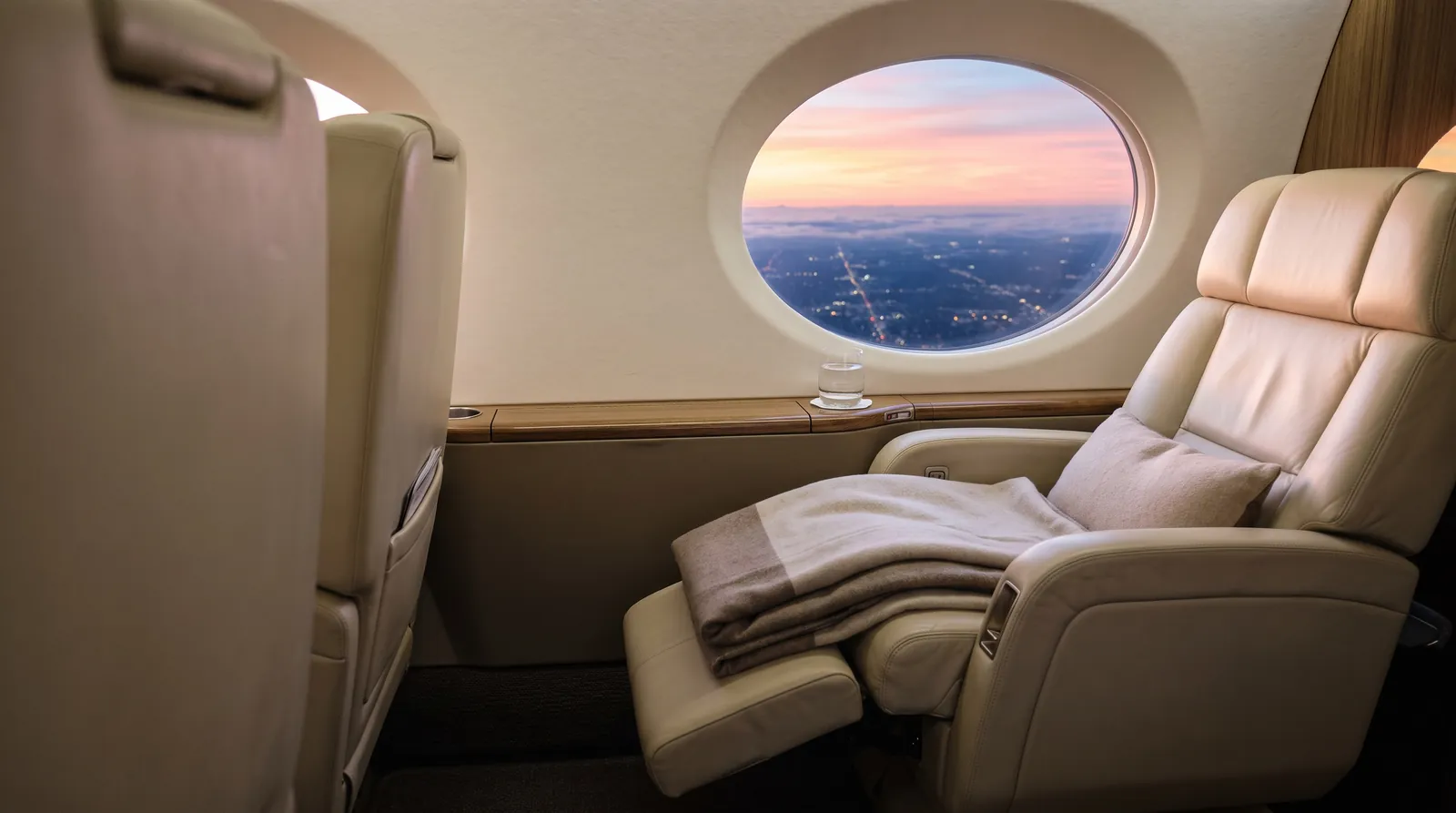
Long-range cabins are now planned in zones: a forward club section, a dining or conference area, a lounge and, on the largest jets, a private suite with a fixed bed. Seats have gained deeper recline and better support for sleep. Bombardier's Nuage seat, for example, combines a patented tilt-link mechanism with a pivot point at the knees to reach what the manufacturer calls a zero-gravity position. Divans fold flat into beds, and two facing seats can often be joined into one. Side-facing divans have their own certification requirements for use during take-off and landing, which is why some are fitted with airbag seatbelts. On the biggest business jets, the principal suite can even be specified with a shower; Gulfstream offers this on the G700.
Galleys grown up
The galley has moved from a corner with a coffee maker to a working kitchen. Gulfstream's G700 ultragalley has more than 10 ft (about 3 metres) of counter space, and the galley zone can be specified with a lounge area. Large-cabin galleys commonly carry convection and steam ovens, generous refrigeration, an espresso machine and proper crockery storage. This changes what can be served, and the details are in our article on catering at altitude. On smaller jets the galley is still compact, and the menu has to follow.
Materials: natural, light and more responsible
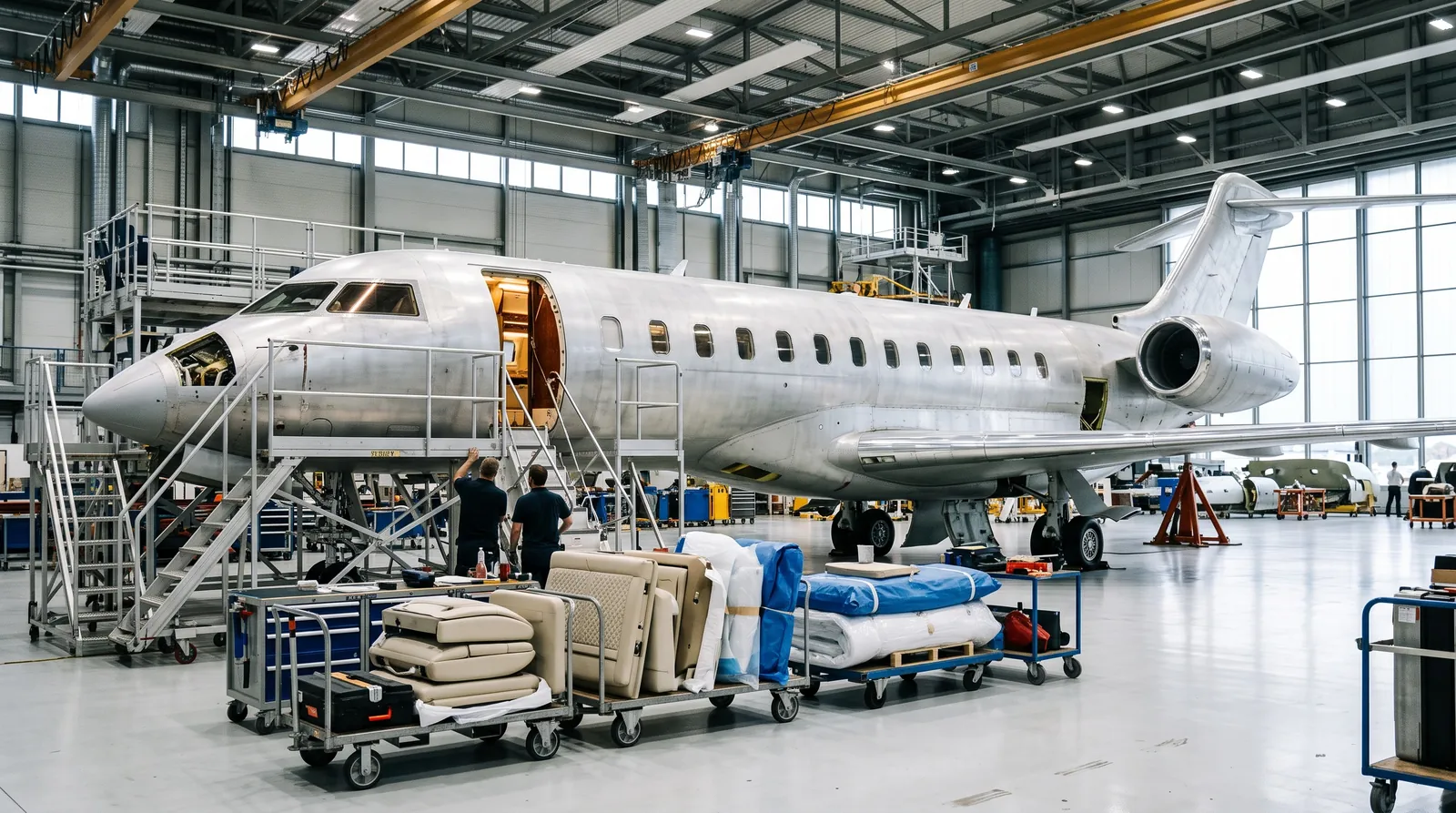
The look of the moment is calm: matte finishes, pale or mid-tone wood, textured wool and natural fibres, and stone used sparingly. Behind the surface, almost everything is engineered for weight. Wood and stone arrive as thin veneers bonded to lightweight honeycomb panels, because every kilogram costs range or payload and adds to fuel burn over the life of the aircraft.
- Wood. Veneers from responsibly managed sources, often with matte or open-pore finishes instead of high gloss.
- Stone. Very thin slices on a light backing, mostly on floors around the entrance, galley and lavatory.
- Textiles. Wool and other natural fibres on seats and walls, and leather alternatives for owners who prefer them.
- Durability. Surfaces chosen to be repaired and refinished at refurbishment rather than replaced.
Whatever the material, it has to pass aviation flammability tests before it can fly, which narrows the choice more than most owners expect. How that works is covered in our guide to cabin completions.
Questions
What is circadian lighting on a private jet?
It is an LED cabin lighting system that changes colour and brightness during the flight to imitate the natural progression of daylight, from warm sunrise tones to cooler daylight and back. Some systems follow the time at the destination to help passengers adjust, although lighting alone does not prevent jet lag.
Can you sleep properly on a business jet?
On long-range jets, yes: divans fold into flat beds, seats recline deeply and the largest aircraft can have a private suite with a fixed bed. On smaller jets the seats recline and some can be joined into a bed, but space is tighter.
Can a jet interior use real wood and stone?
Yes, but usually as thin veneers bonded to lightweight panels to keep weight down. Every material must also pass aviation flammability tests, so some finishes that work in a house or on a yacht are not allowed in an aircraft.
Figures checked 19 October 2026. Prices are indicative and never a quote. Seen something out of date? Tell the editors.