
HELHelicopters · Guide
Helicopter Transfers: When the Rotor Beats the Road
Where a helicopter saves real time and where it does not, plus what weather, landing sites, baggage and hourly rates mean for the transfer you are planning.
4 min readRolavia editors
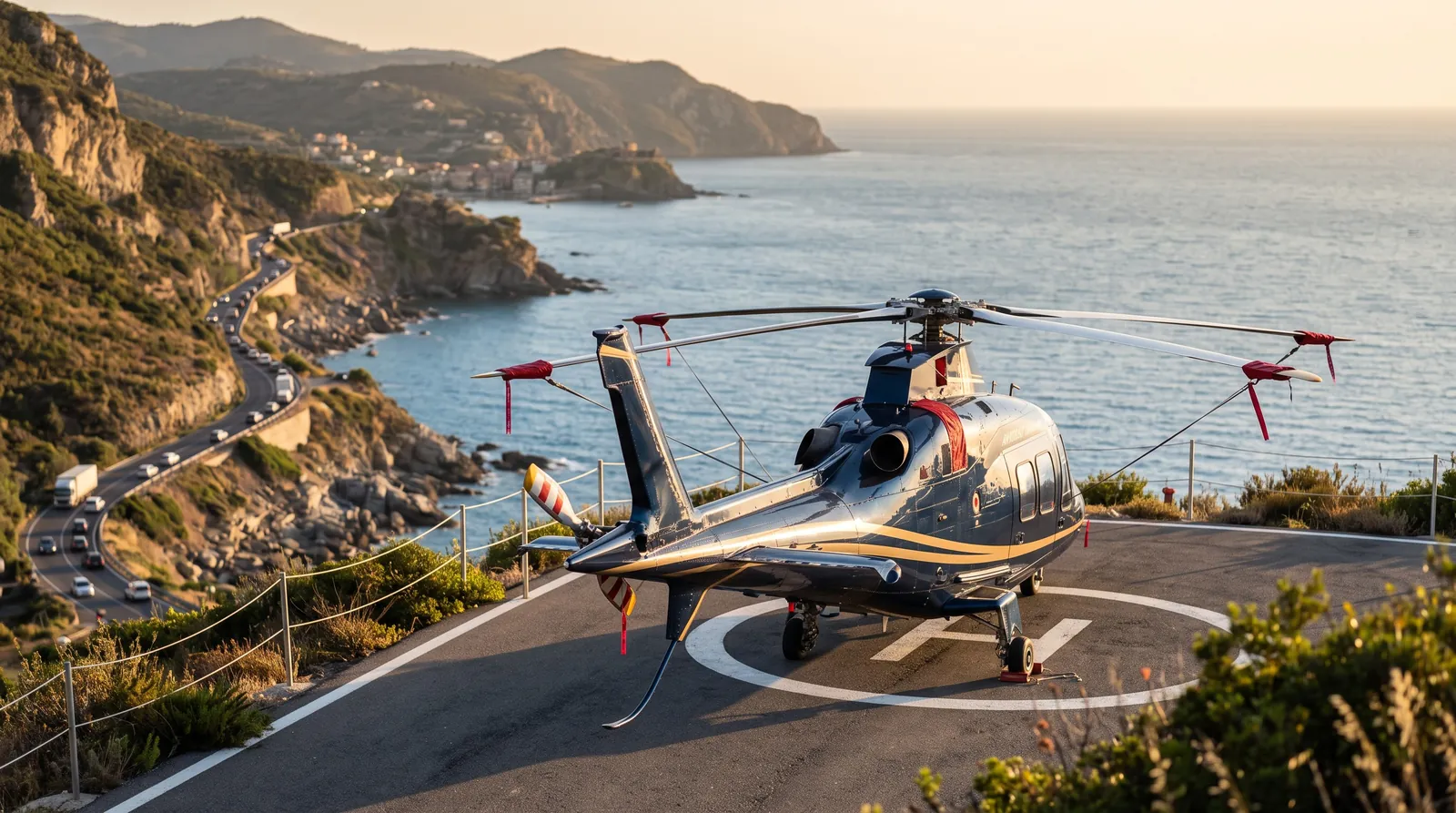
A helicopter beats the road when the road is slow, not simply when the distance is long. Across mountain valleys, a congested coastline or a city ringed by traffic, a modern transfer helicopter cruising at 125 to 165 knots turns a two-hour drive into a flight of 20 to 40 minutes. Over a short distance on a good road, the fixed time spent at each end of a helicopter trip eats most of the gain. Over a long distance, a turboprop or a jet is usually quicker and cheaper per seat.
Where the time saving is real
The honest comparison is door to door, not flight time against drive time. Every helicopter transfer carries an overhead: reaching the pad, a short safety briefing, loading bags, start-up, and at the other end a car from the landing site to the house or hotel. Allow roughly 15 to 20 minutes before the flight and 5 to 15 minutes after it. On routes where the drive is under half an hour, the helicopter rarely wins by much. Where the drive climbs into the mountains, crawls along a coast in summer or crosses a city at rush hour, it wins by an hour or more.
| Route | Flight time | Helicopter, door to door | Car, door to door |
|---|---|---|---|
| Nice airport to Monaco | about 7 min | 30 to 40 min | 40 to 60 min, much longer at summer peaks |
| Nice airport to Saint-Tropez | 25 to 30 min | 50 to 60 min | 1 h 40 to 2 h, up to 3 h in July and August |
| Geneva to Courchevel | 35 to 45 min | 1 h to 1 h 15 | 2 h 15 to 2 h 30, 3 h 15 or more on winter Saturdays |
| Chambéry to Courchevel | about 25 min | 45 to 55 min | 1 h 20 to 1 h 30 |
| Sion to Verbier | 10 to 15 min | 30 to 40 min | 45 min to 1 h |
The Helicopter or Car tool times these and other classic transfers both ways, including the overhead at each end.
Weather decides more than the timetable
Most transfer flights are flown under visual flight rules, which means the crew needs a cloud base and visibility good enough to see the ground and the terrain ahead. Under the EASA rules for commercial flights, a single-engine helicopter may not fly at night, out of sight of the surface, below a 600 ft cloud ceiling or in visibility under 800 m. Twin-engine helicopters certified for instrument flight can climb through cloud between airports with published procedures, but most heliports and mountain pads have no instrument approach, so the final part of the trip still depends on what the crew can see. Strong wind, low cloud in the valleys and snow showers are the usual reasons for a hold. Very few civil helicopters are cleared to fly into icing conditions, which matters in the Alps in winter.
Landing sites and heliports
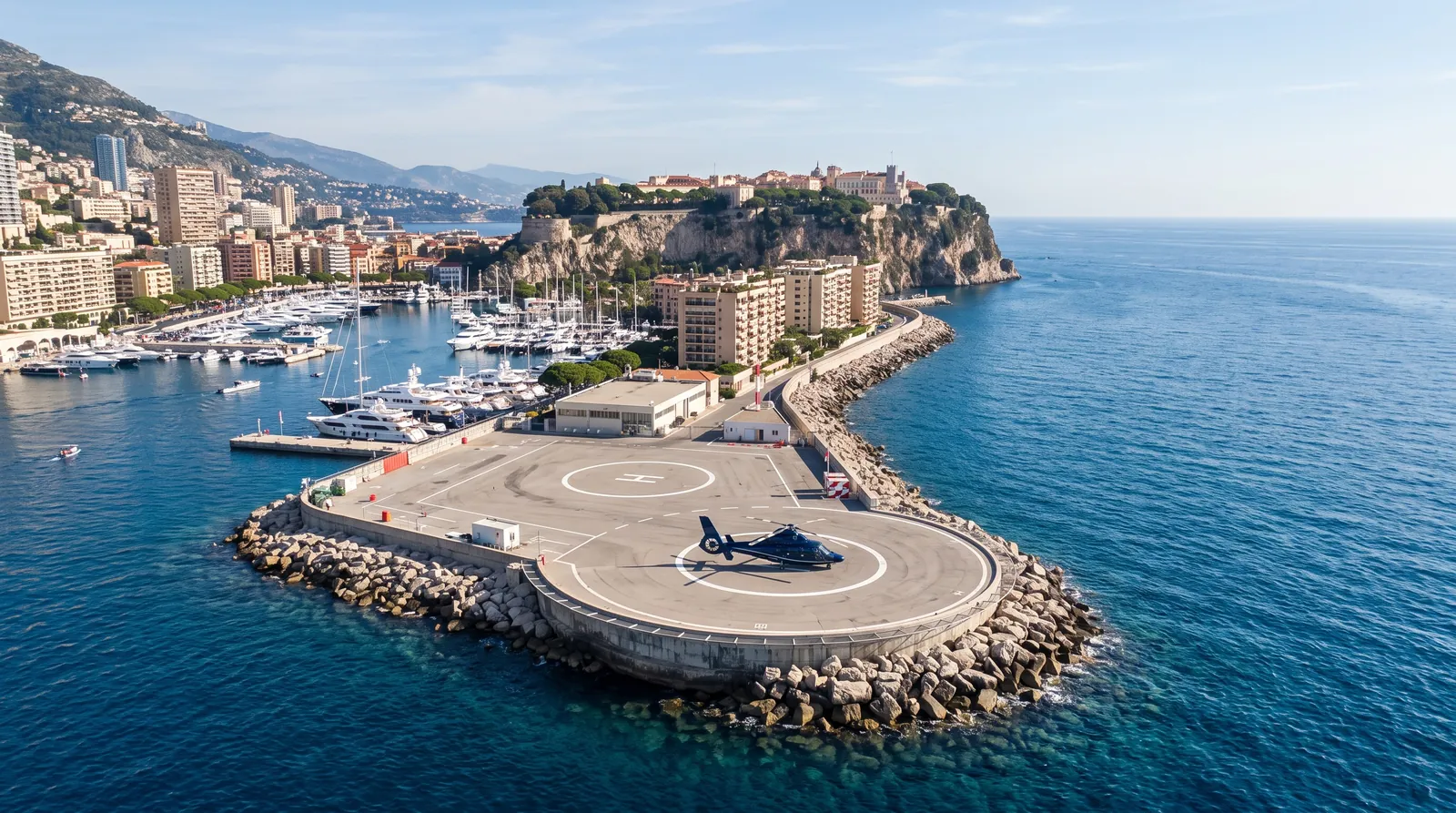
Helicopters can use airports, public heliports such as the one in Monaco, hotel and resort helipads, and in many countries private sites with the landowner's permission. The rules differ sharply by country. Some states allow landings in open fields subject to notice and minimum distances from people and buildings, others restrict them to registered sites, and in the French mountains leisure landings by powered aircraft are limited by law to approved aerodromes and sites. If you want to land at a villa, a vineyard or a yacht club, give the operator the exact location early so the site can be assessed, and expect that some places will be refused.
Over cities, the number of engines also matters. Many urban areas channel single-engine helicopters along rivers or open corridors, or exclude them altogether. The background is in Single or Twin Engine: Why It Matters for Your Helicopter.
Baggage and passengers
A helicopter is limited by weight and by volume, and both are tighter than in a business jet. Operators ask for passenger weights and bag counts in advance because the fuel load, the temperature and the elevation of the landing site all reduce what the machine can lift. Soft bags travel better than hard cases. Skis, golf bags and large suitcases may need a separate hold, an external carrier or a van on the road, and many families send the heavy luggage by car while they fly. Pets usually travel in the cabin on private flights if the operator agrees in advance.
What a transfer costs
Private helicopters are priced by flight time, and the clock includes positioning from the helicopter's base when it is not already where you are. Landing fees, heliport fees and waiting time come on top. On a few busy routes, notably Nice to Monaco, shared seats on scheduled shuttles cost a fraction of a private flight.
| Class | Typical types | Indicative rate |
|---|---|---|
| Light single-engine | ACH130, Bell 505 | EUR 1,500 to 3,000 |
| Light twin | AW109 Trekker, ACH145 | EUR 3,000 to 5,500 |
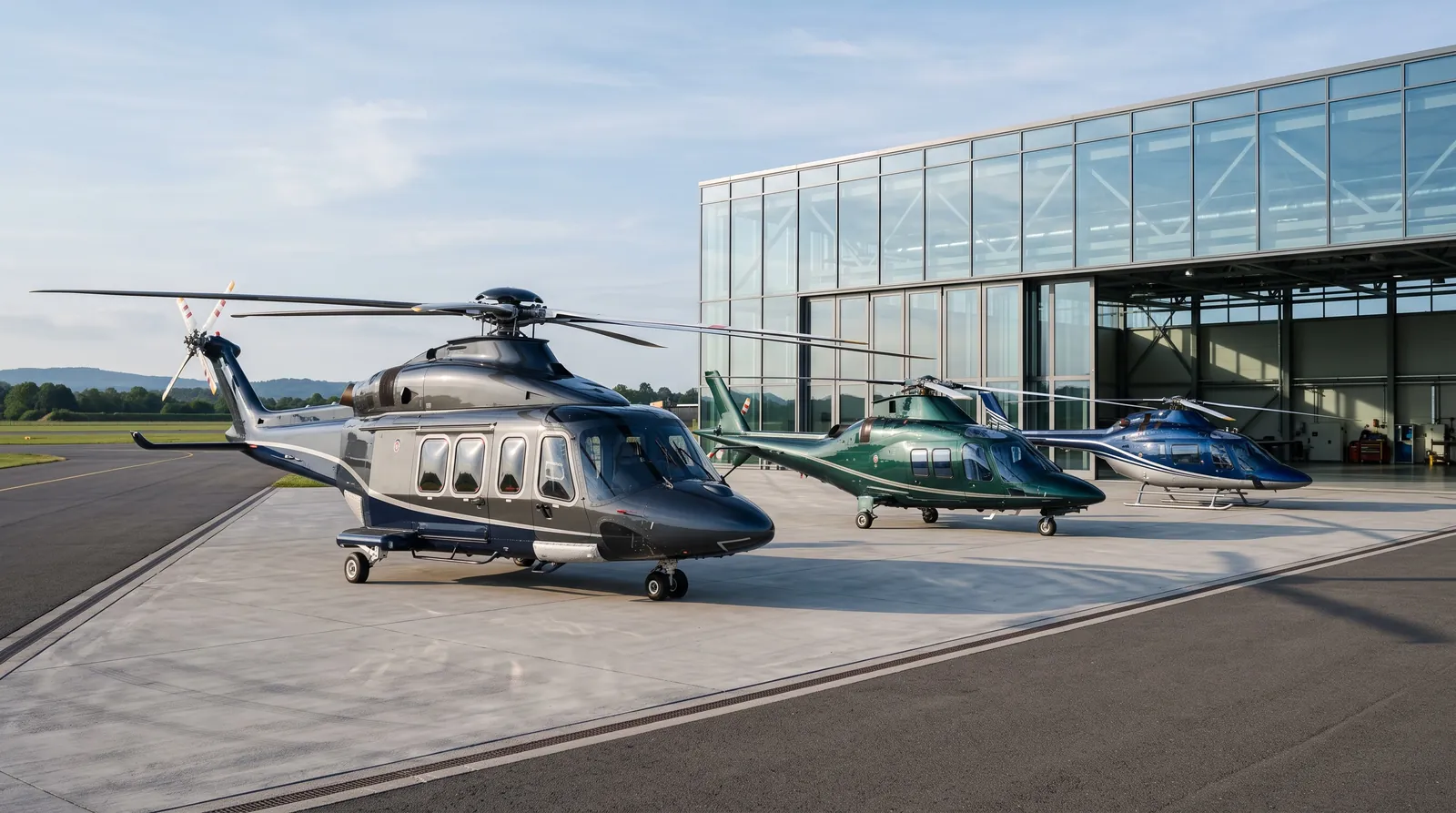
| Medium twin | AW169, ACH160, AW139 | EUR 5,500 to 10,000 |
These are broad bands rather than quotes. The machines themselves are compared in Airbus, Leonardo, Bell: The VIP Helicopter Field, and the classic routes are covered in Nice to Monaco by Helicopter and Alpine Transfers by Helicopter.
Questions
Is a helicopter transfer faster than a car?
It depends on the road. Where the drive is slow because of mountains, coastal traffic or a city, a helicopter can save an hour or more door to door. On short routes with good roads, the time spent reaching the pad and driving from the landing site at the other end often cancels out most of the gain.
Can helicopters fly in bad weather?
Most transfer flights are flown visually and need a reasonable cloud base and visibility. Single-engine commercial flights in Europe are restricted to daylight and conditions in sight of the surface. Twin-engine helicopters certified for instrument flight have more options, but low cloud at the landing site or icing can still stop a flight.
How much luggage can I take on a helicopter?
Less than on a jet, and the limit is weight as much as volume. The operator will ask for passenger weights and bag counts before the flight. Soft bags are easier to stow, and bulky items such as skis or several large suitcases often travel separately by road.
How much does a private helicopter transfer cost?
Indicatively, from about EUR 1,500 per flight hour for a light single to EUR 10,000 per flight hour for a medium twin in Europe (autumn 2026, before VAT). Positioning time, landing fees and waiting time are added, so ask for a quote that shows each item.
Figures checked 19 October 2026. Prices are indicative and never a quote. Seen something out of date? Tell the editors.