
HELHelicopters · Guide
Alpine Transfers by Helicopter: Geneva to Courchevel and Beyond
Flight times from Geneva, Chambéry, Sion and Samedan, the altiport at Courchevel, weather holds, skis and baggage, and why winter Saturdays need booking well ahead.
4 min readRolavia editors
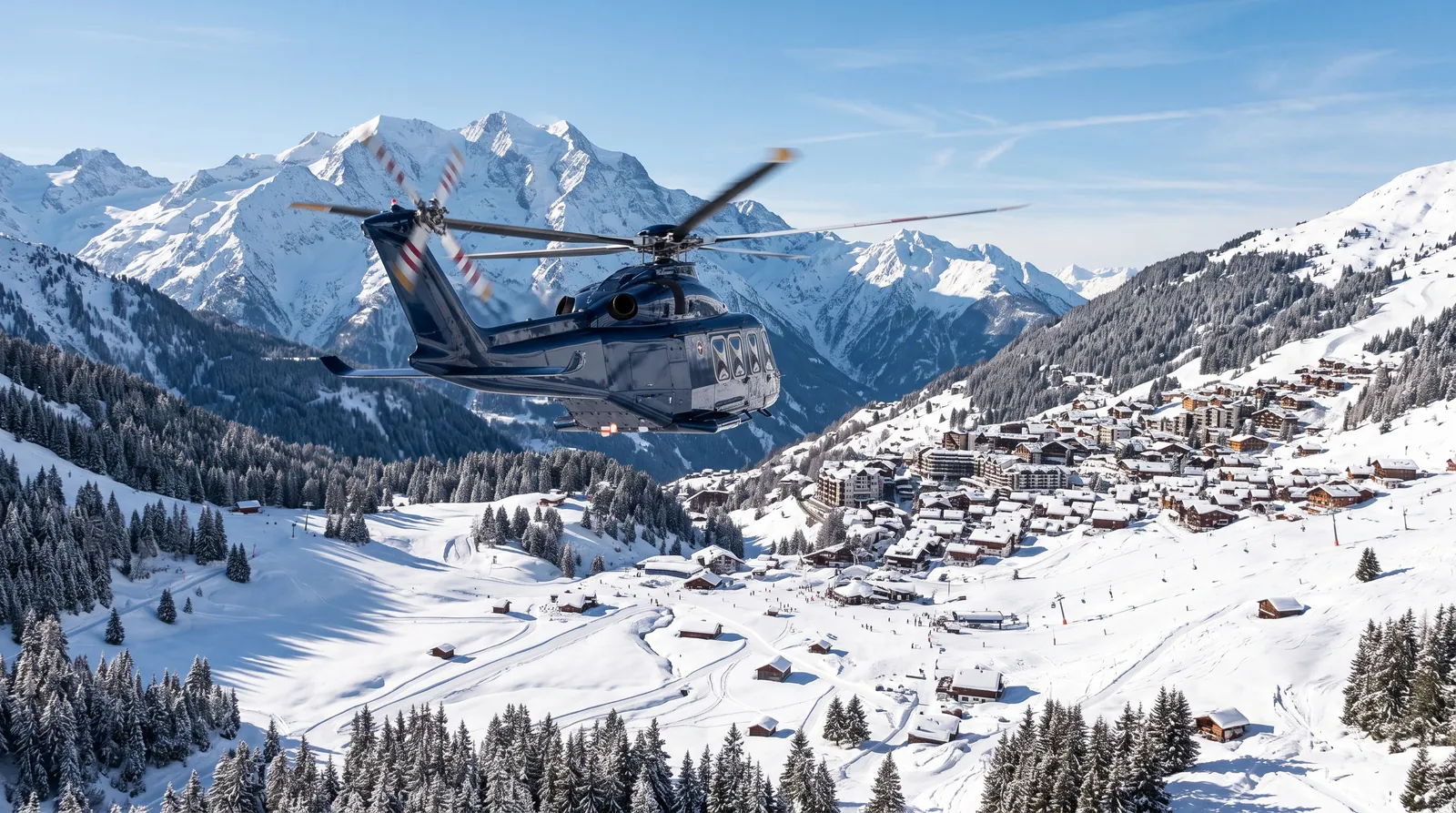
In the Alps a helicopter turns the longest part of a ski trip into the shortest. Geneva to Courchevel takes 35 to 45 minutes in the air against two and a quarter hours or more on the road, and well over three hours on a busy winter Saturday. From Chambéry the flight is about 25 minutes, and from Sion to Verbier or Zermatt it is a matter of 10 to 20 minutes. The catch is the mountain weather, which can hold a flight for hours, and the demand on changeover days, which can leave no helicopter free at all.
Routes and typical times
| Route | Helicopter flight | By road |
|---|---|---|
| Geneva to Courchevel | 35 to 45 min | 2 h 15 to 2 h 30, 3 h 15 or more on winter Saturdays |
| Chambéry to Courchevel | about 25 min | 1 h 20 to 1 h 30 |
| Sion to Verbier | 10 to 15 min | 45 min to 1 h |
| Sion to Zermatt | 15 to 20 min | about 1 h to Täsch, then the shuttle train |
The Helicopter or Car tool sets these routes side by side, door to door in both directions.
Geneva: the longest drive, the biggest saving
Geneva is the main gateway for the French and Swiss resorts, and on winter weekends its business aviation apron is very busy. The road to the Tarentaise valley is long, and the final climb to the resorts is where Saturday traffic stacks up. A helicopter from Geneva flies over all of it. Passengers usually walk or are driven from the business aviation terminal to the helicopter, and at the other end a car meets the flight for the short run to the chalet. The airport side is covered in Geneva: The Gateway to the Alps and the Lake.
Chambéry, Sion and Samedan
Chambéry is closer to the Tarentaise and handles many winter weekend jets; from there the helicopter saves around an hour. Sion, in the Rhône valley, is the natural airport for Verbier, Crans-Montana and Zermatt, which is car-free, so a helicopter avoids both the road to Täsch and the change to the train. Samedan, the Engadin airport at about 5,600 ft (1,707 m), lies only a few kilometres from St. Moritz, so passengers usually finish by car; helicopters there are more often used to reach the valley from further afield or for onward hops. The wider choice of airports for Courchevel is set out in Courchevel by Private Jet: Chambery, Geneva or the Altiport.
The altiport and other landing sites
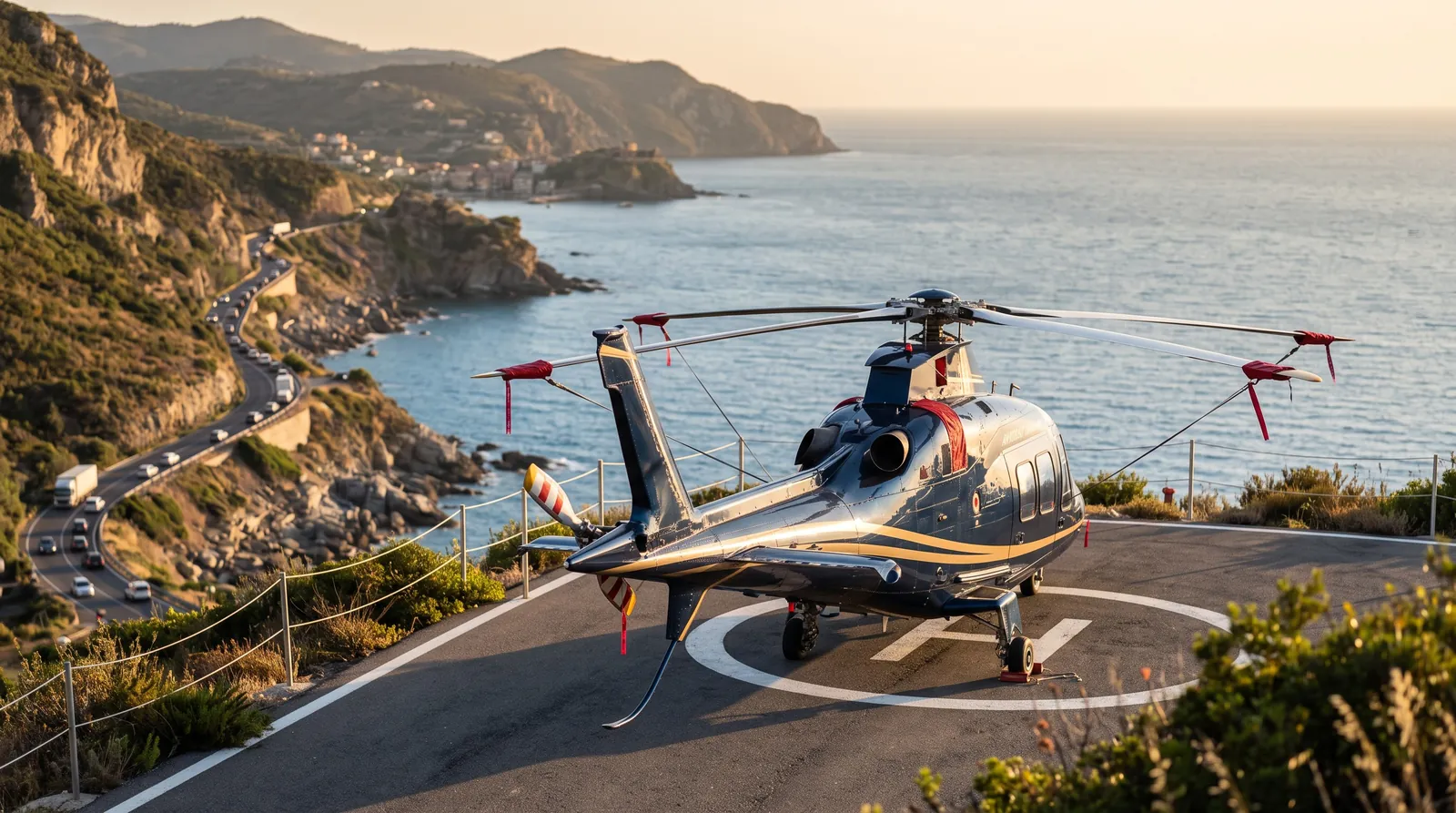
Helicopters for Courchevel land at the altiport at Courchevel 1850, at about 6,588 ft (2,008 m), next to the pistes. It is best known for its short sloping runway, about 1,760 ft (537 m) long with a gradient of around 18.5 per cent, which only specially trained fixed-wing pilots may use; for helicopters it serves as the resort's heliport. Méribel has an altiport too. In the French mountains, leisure landings by powered aircraft are restricted by law to approved aerodromes and sites, so a transfer ends at an altiport or authorised helipad rather than on a chalet terrace. Switzerland has its own rules, and its high mountain sites are also tightly defined. More on the runway in Courchevel Altiport: The Steep Runway Above the Pistes.
Weather holds
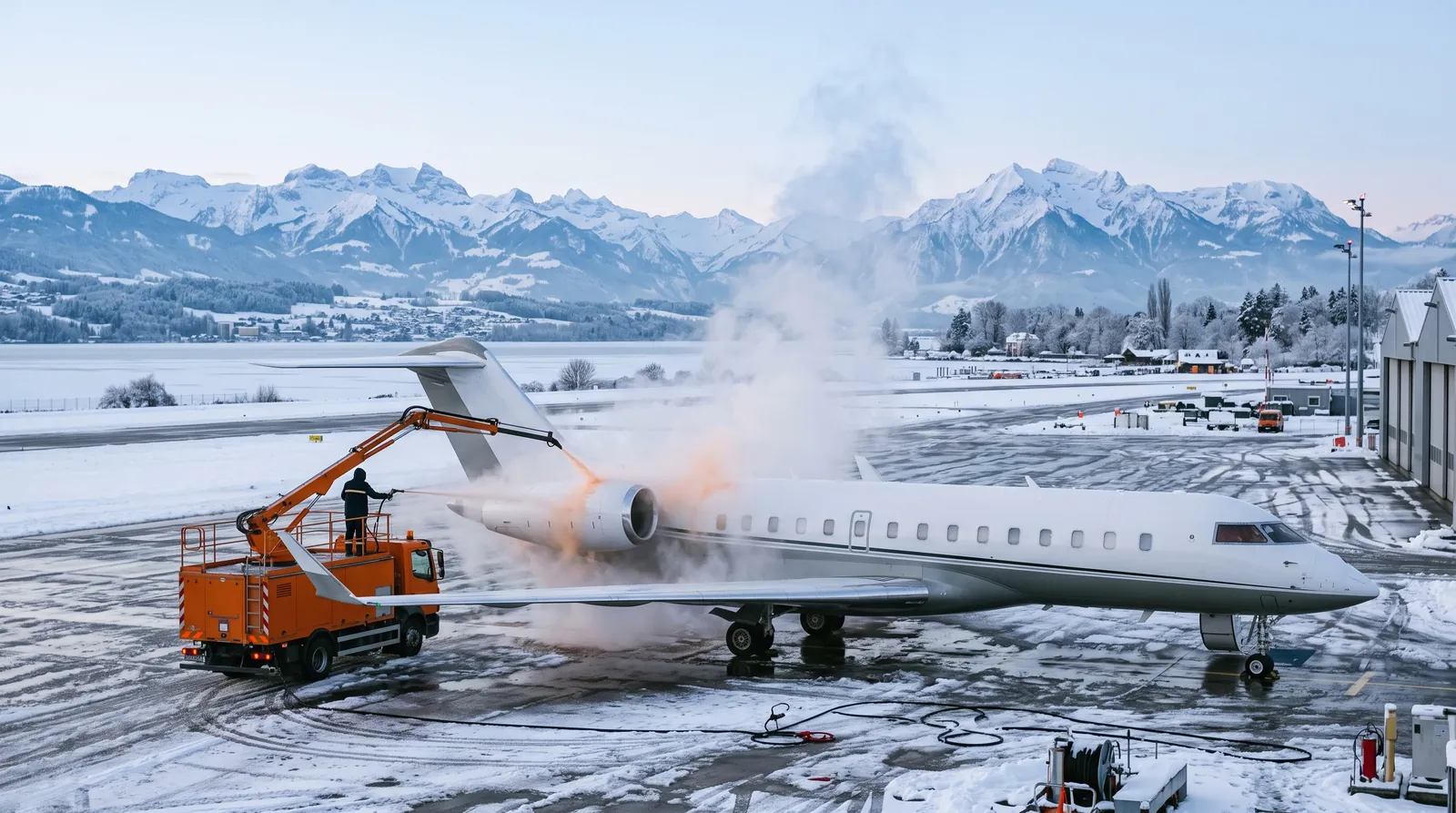
Mountain transfers are flown visually, and the crew needs to see the valleys and the landing site. Low cloud filling the valleys, heavy snowfall, strong wind over the ridges and the risk of icing are the usual reasons for a hold. Morning fog in the lower valleys often lifts by late morning; a front can close a route for the day. Commercial single-engine flights must also finish before nightfall, which in December comes early. The operator will decide on the day and usually keeps a car in reserve. If the jet lands in the late afternoon, ask whether the helicopter can still make the last light, and plan the road option at the same time.
Baggage and skis
Ski bags are long, boot bags are heavy and helicopter payload falls as altitude and temperature change. Ask whether skis travel inside the cabin, in a baggage hold or in an external carrier, and give passenger weights and a precise bag count. Many travellers fly with hand luggage and let the skis and suitcases follow by road.
Booking ahead
Saturday and Sunday in high season, the Christmas and New Year weeks and the February school holidays are when demand peaks. Helicopters, crews and landing slots at the altiport are finite, so book weeks ahead for those dates and confirm the flight with the operator the day before, with the jet's arrival time and the handler's details. Being flexible by an hour often makes the difference between a flight and a long drive.
Questions
How long is the helicopter from Geneva to Courchevel?
Typically 35 to 45 minutes in the air, or roughly one hour to one hour fifteen door to door including the walk to the helicopter and the car from the altiport. By road the trip usually takes two and a quarter to two and a half hours, and often more than three hours on winter Saturdays.
Where do helicopters land in Courchevel?
At the Courchevel altiport above Courchevel 1850, at about 6,588 ft (2,008 m), which doubles as the resort's heliport. In the French mountains, leisure landings by powered aircraft are restricted to approved aerodromes and sites, so chalets are reached by car from there.
Can I take skis on a helicopter transfer?
Usually yes, but it depends on the helicopter and the load. Skis may travel inside, in a baggage hold or in an external carrier. Tell the operator in advance, and consider sending skis and large suitcases by road.
What happens if the weather is bad?
The operator holds or cancels the flight, because mountain transfers are flown visually. A good arrangement keeps a car on standby so you can continue by road. Single-engine commercial flights must also land before nightfall.
Figures checked 19 October 2026. Prices are indicative and never a quote. Seen something out of date? Tell the editors.