PJTPrivate Jets · Guide
Flying Private for the First Time: What Actually Happens
From booking to the car at the aircraft steps: how a first private flight unfolds, what to bring, when to arrive and what the operator needs to know in advance.
4 min readRolavia editors
A first private flight is calmer and quicker than most people expect. You arrive at a private terminal, usually 15 to 30 minutes before the agreed departure time, show your passport, walk or are driven to the aircraft, hear a short safety briefing from the crew and leave when you are ready and the airport allows. What changes is not the flying but the preparation: the operator needs a handful of details in advance, and the sooner they arrive, the smoother the day.
Before the day: what the operator needs
Once the booking is confirmed, the operator or broker sends a short list of questions. Answer them early, because several feed into flight planning and the paperwork that authorities require.
- Passenger details. Full names exactly as in the passport, nationality, date of birth and passport numbers for international flights. Many countries require this information before departure.
- Baggage. The number and rough size of bags, and anything unusual: skis, golf bags, musical instruments, sporting guns. Firearms need permits and advance notice in every country involved.
- Pets. Species, size and travel documents.
- Catering and allergies. Usually 24 to 48 hours ahead, more for remote airports.
- Ground transport. Who drops you off, whether a car may drive to the aircraft and what waits at the other end.
On smaller jets the crew may also ask for approximate passenger weights. It is not curiosity: a weight and balance calculation is part of every flight.
Arriving at the private terminal
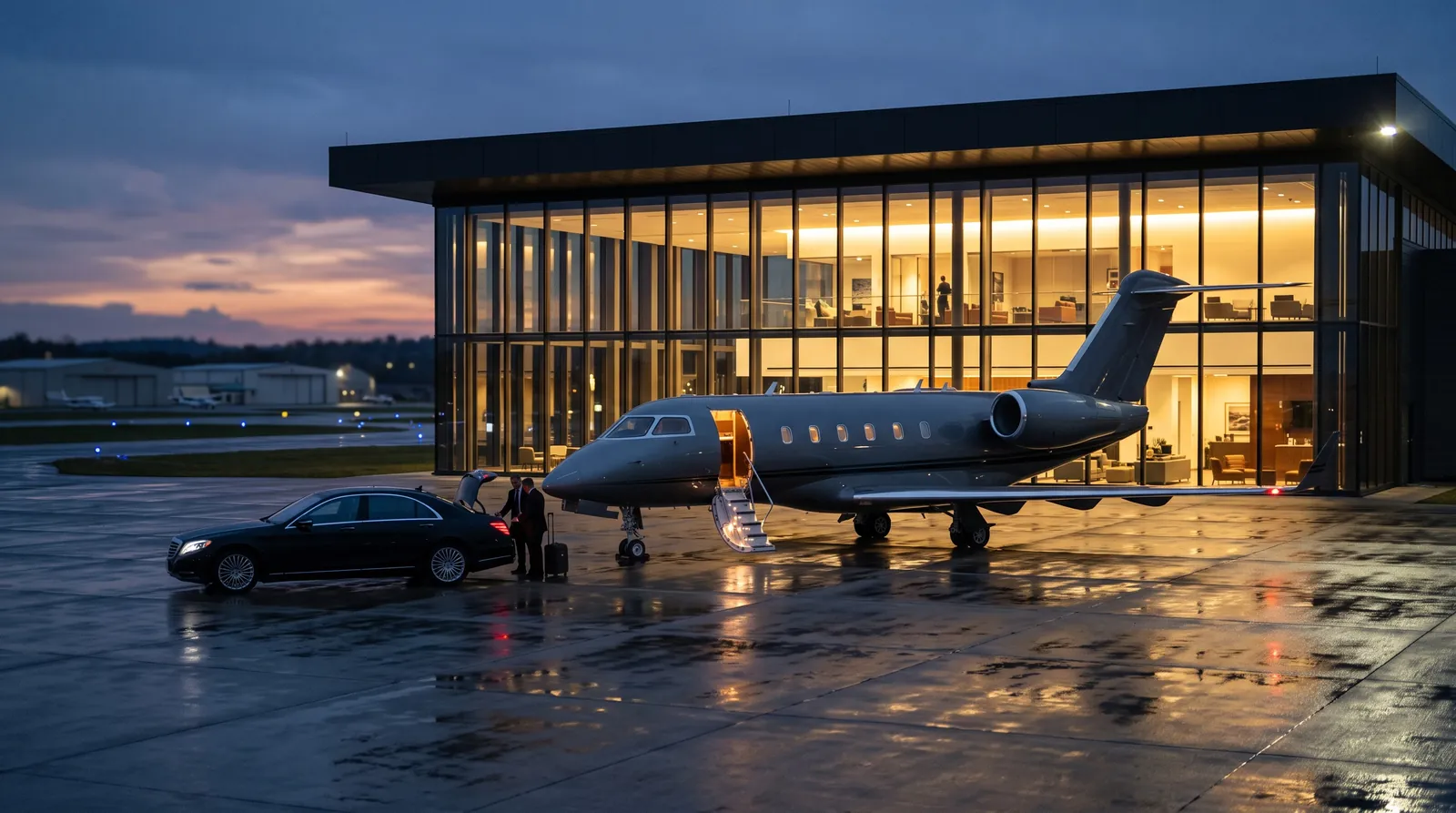
Private flights leave from a fixed base operator, the private terminal that looks after passengers, crew and aircraft. The car usually pulls up at the door, a member of staff takes your bags and you wait in a lounge rather than a queue. For an international flight, border police check passports inside the terminal or, at some airports, at the aircraft. Security screening varies by airport and aircraft size, so do not assume it will be skipped. The explainer on what an FBO is covers the terminal in more detail, and the FBO arrival checklist lists the documents to carry.
Within the Schengen area there is normally no border control, though temporary checks are sometimes reintroduced. You still need a valid passport or national identity card, and the operator will ask for it.
Bags and pets
Baggage space is finite and depends on the type: a light jet holds far less than its seat count suggests. Soft bags fit where hard cases do not, and the captain has the final word on what can be loaded safely. Mention large items when you book, not at the steps.
Many operators accept dogs and cats in the cabin, and some charge a cleaning fee, but the destination's rules apply in full: microchip, rabies vaccination and the right health documents. Some countries are as strict about the route as about the animal. Great Britain, for example, accepts dogs, cats and ferrets only through approved routes and carriers, which include approved charter arrangements, so the choice of airport and operator matters.
On board
Most charter jets fly with two pilots, and larger aircraft add a flight attendant. Before engine start a crew member gives a safety briefing: exits, seat belts, oxygen masks, life jackets on flights over water and the location of the fire extinguisher. It is short, it is required, and it is worth listening to even on the tenth flight.
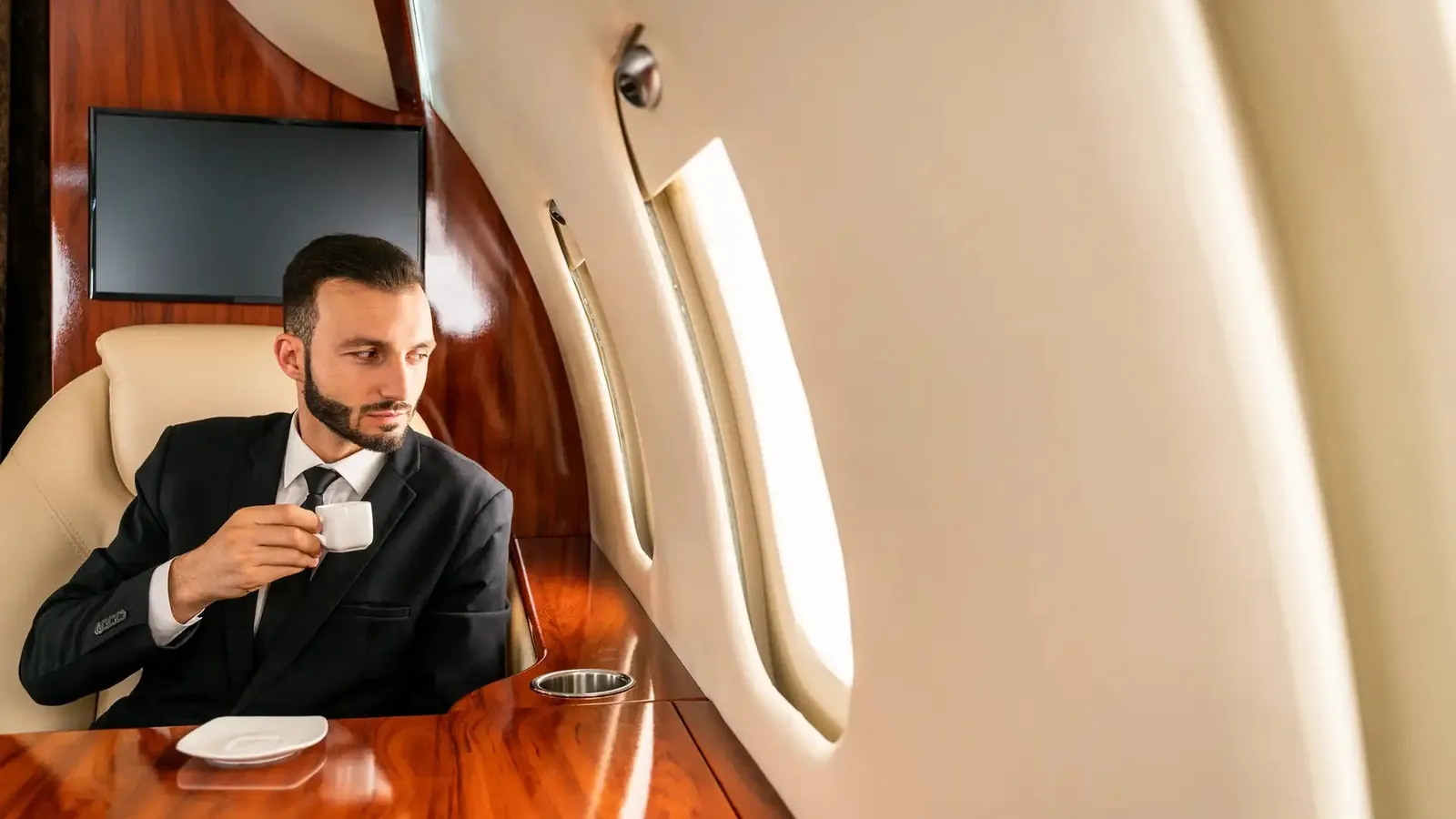
Catering arrives as ordered: on a light jet, a cold selection and drinks from a compact cabinet; on a large cabin jet, hot meals from a proper galley. Smaller jets may have a toilet that is little more than a seat with a curtain, which is worth knowing before a two hour flight. Connectivity depends on the aircraft, so ask in advance if you need to work. The article on catering at altitude explains lead times and why food tastes different in the air.
Landing and the last mile
After landing, the aircraft taxis to the private terminal at the destination. Arriving international passengers clear immigration and customs there, usually quickly when the authorities have been notified in advance. At many airports a car can meet you at the aircraft; at others the rules require you to walk through the terminal. Your bags are unloaded and carried to the car for you.
A few habits make every later flight easier: keep passports to hand, travel with soft luggage, send all passenger details in one message and tell the operator about changes as soon as you know them. If you are still choosing who to fly with, the checklist on choosing a charter operator is the place to start.
Questions
How early should I arrive for a private jet flight?
Arriving 15 to 30 minutes before the agreed departure time is usual at most private terminals. Allow more at busy airports in peak season, on international flights with border checks at the terminal, or when you travel with pets or sporting equipment. The operator will tell you if the airport needs longer.
Do I need a passport to fly on a private jet?
Yes for international flights, exactly as on an airline, and the operator will ask for the details before departure. Within the Schengen area there is normally no border control, but you still need a valid passport or national identity card, and operators will want to see it.
Can I take my dog on a private jet?
Many operators accept dogs and cats in the cabin, sometimes with a cleaning fee, but the rules of the destination still apply: microchip, rabies vaccination and the correct health documents. Some countries, Great Britain among them, also restrict the routes and carriers through which pets may arrive, so mention the pet when you book.
Is there a security check for private flights?
It depends on the airport, the country and the size of the aircraft. Some private terminals screen passengers and bags much like an airline terminal, only faster, while others apply lighter procedures. Assume a check may happen and pack as you would for an airline flight unless the operator tells you otherwise.
Figures checked 19 October 2026. Prices are indicative and never a quote. Seen something out of date? Tell the editors.