
PJTPrivate Jets · Explainer
Light, Midsize, Heavy: The Private Jet Categories Explained
From very light jets to bizliners: how many people each private jet class carries, how far it flies, how tall the cabin is and which trips it suits.
5 min readRolavia editors
Private jets are grouped into classes by size, and the class tells you most of what matters before you open a single brochure: how many people travel in comfort, how far the aircraft flies without a stop, whether you can stand up in the cabin and roughly what an hour costs. The labels are industry shorthand rather than legal categories, so the edges blur, but the logic holds from the smallest jet to an airliner with a private cabin.
How the classes are drawn
Three numbers do most of the sorting. Range decides which trips are nonstop. Cabin height decides whether a four hour flight feels like a long car journey or a sitting room. Passenger count is the third, and the one brochures stretch most: the certified maximum is often well above the number of people who travel comfortably with luggage.
Cost follows size. Larger jets burn more fuel, need longer runways and cost more to crew and maintain, so the useful question is which is the smallest jet that does the trip properly, with a margin for weather and baggage.
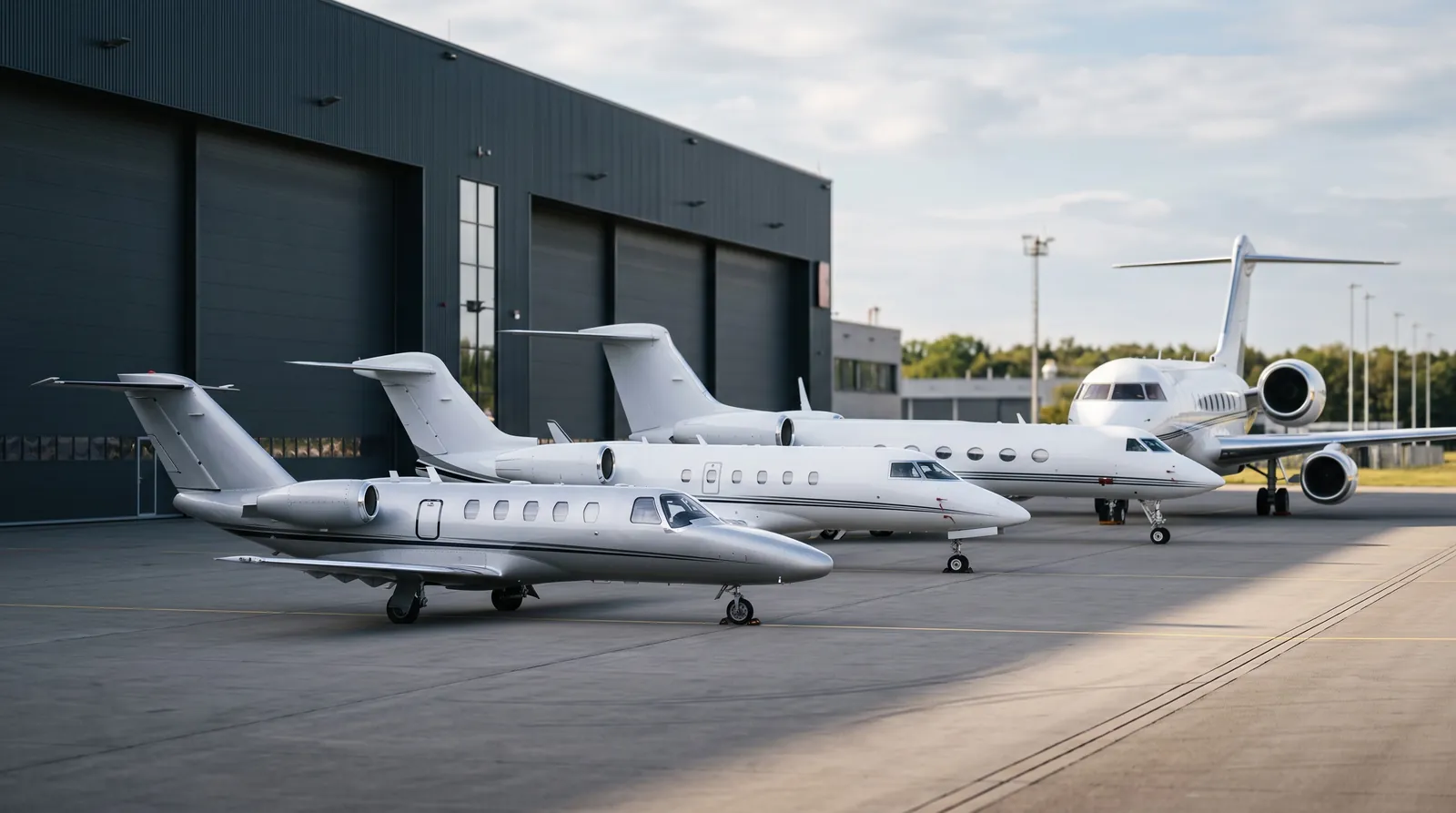
| Class | Typical passengers | Range (nm) | Cabin height | Examples |
|---|---|---|---|---|
| Very light | 4 to 5 | about 1,100 to 1,550 | under 5 ft (1.5 m) | HondaJet Elite II, Citation M2 Gen2 |
| Light | 5 to 7 | about 2,000 to 2,200 | 4 ft 9 in to 5 ft 1 in (1.45 to 1.55 m) | Phenom 300E, Citation CJ4 Gen2, Pilatus PC-24 |
| Midsize | 7 to 9 | about 2,000 to 3,300 | 5 ft 8 in to 6 ft (1.73 to 1.83 m) | Citation XLS Gen2, Citation Latitude, Praetor 500 |
| Super midsize | 8 to 10 | about 3,400 to 4,000 | about 6 ft (1.83 m) | Challenger 3500, Citation Longitude, Praetor 600, G280 |
| Heavy (large cabin) | 10 to 14 | about 4,000 to 6,600 | 6 ft to 6 ft 6 in (1.83 to 1.98 m) | Challenger 650, Falcon 2000LXS, G500, Falcon 6X, G600 |
| Ultra long range | 12 to 16 | about 7,500 to 8,000 | 6 ft 2 in to 6 ft 5 in (1.88 to 1.96 m) | Gulfstream G700 and G800, Global 7500 and Global 8000 |
| Bizliner | 16 and more, by layout | varies widely | around 2 m and above | ACJ TwoTwenty, ACJ320neo family, Boeing Business Jet |
Very light and light jets
Very light jets carry four or five passengers on hops of one to two hours. Types such as the HondaJet Elite II and the Citation M2 Gen2 are certified for a single pilot, although charter operators often fly them with two. The cabin is a place to sit rather than a room: headroom is around 1.5 metres or a little less, and the toilet, where fitted, may be a belted seat behind a curtain.
Light jets add range, speed and luggage space. A Phenom 300E or a Citation CJ4 Gen2 covers most European city pairs nonstop and is the workhorse of short-notice charter, while the Pilatus PC-24 also uses short and even unpaved runways. Headroom is still that of a large car, so light jets suit flights of up to about three hours.
Midsize and super midsize jets
Midsize is where the stand-up cabin begins. The Citation Latitude offers a flat floor and six feet (1.83 m) of headroom, so passengers walk to the galley without stooping. Ranges of roughly 2,000 to 3,300 nm cover flights of three to five hours.
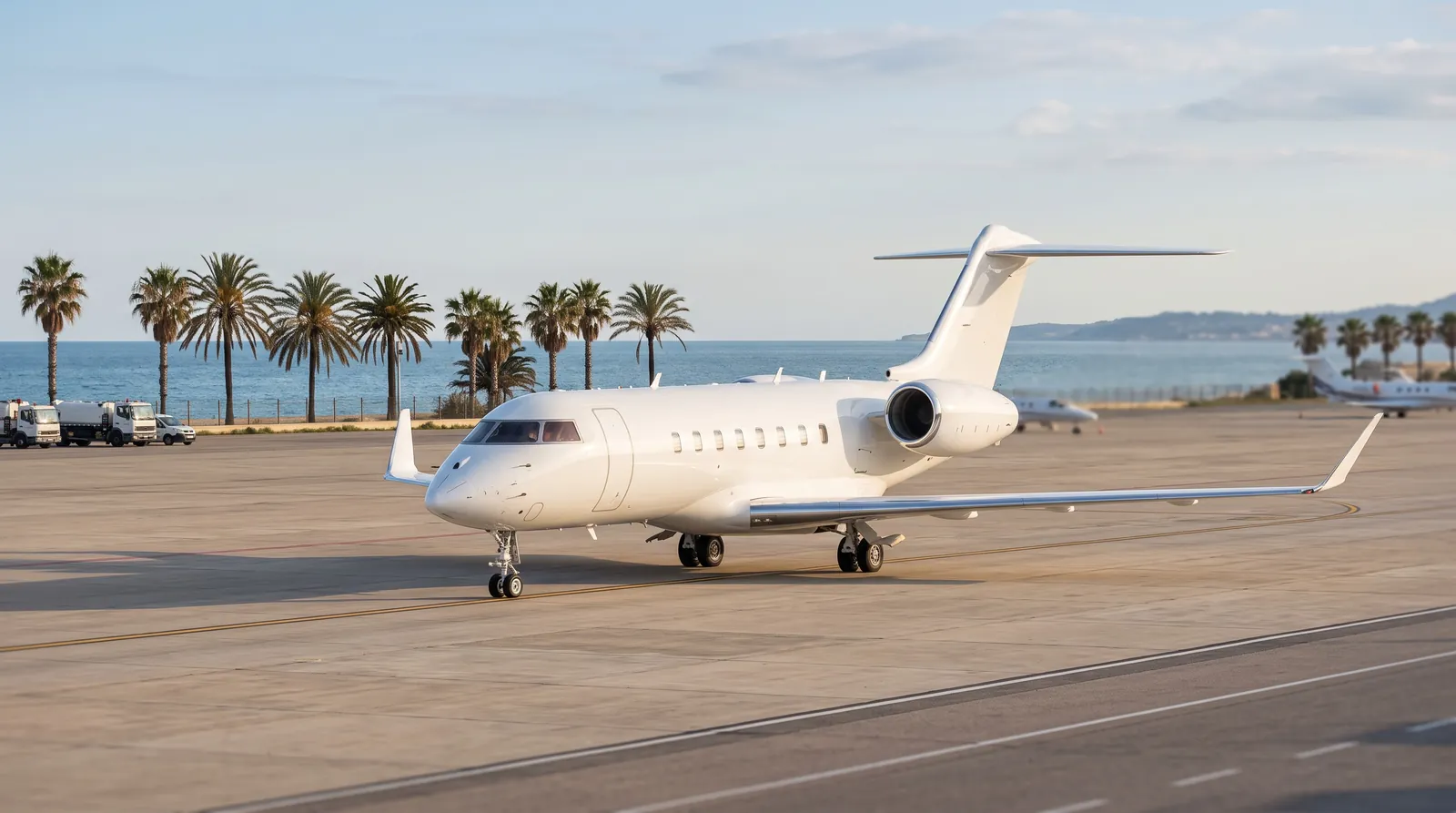
Super midsize jets such as the Challenger 3500, the Citation Longitude and the Praetor 600 add a wider cabin, more baggage room and about 3,400 to 4,000 nm of range. That is enough for US coast to coast flights and for Western Europe to the Gulf, which is why the class is often called the charter sweet spot: a proper cabin without the running costs of a large cabin jet. The Challenger 3500 profile covers the class benchmark.
Heavy and ultra long range jets
Heavy, or large cabin, jets are built for transatlantic flying. The Challenger 650, Falcon 2000LXS, Gulfstream G500 and Falcon 6X carry ten to fourteen passengers in comfort, typically with a flight attendant, a full galley and separate cabin zones. At the upper end of the class, aircraft such as the Gulfstream G600 and Falcon 8X fly from Europe to the US West Coast.
Ultra long range jets such as the Gulfstream G700 and G800 and the Global 7500 and 8000 quote 7,500 to 8,000 nm. They link Europe, Asia, the Gulf and the Americas without a stop, and the longest cabins hold four or five living areas, a private bedroom and a crew rest compartment.
Bizliners such as the ACJ TwoTwenty, the ACJ320neo family and the Boeing Business Jet are airliners with private interiors: the largest cabins of all, but with airline-sized needs for parking and runways, and a range that depends on the auxiliary fuel tanks fitted.
Turboprops and the overlaps
Turboprops such as the Pilatus PC-12 NGX sit beside the jet classes rather than below them: slower, but at home on short strips, islands and mountain airfields. The classes also overlap; the Praetor 500, for example, is a midsize jet with close to super midsize range. Treat the class as a starting point and check the specific aircraft. The guide to reading an aircraft spec sheet explains why brochure range flatters.
Choosing the right class
- Count people and bags together. A light jet with six passengers and ski bags is not the same proposition as with three and soft holdalls.
- Use real range, not brochure range. Winter headwinds, a full cabin and a distant alternate airport can turn a nonstop into a fuel stop.
- Check the runway. Short, steep or high airports exclude some larger jets, whatever their range.
- Weigh the duration. Beyond about three hours, the stand-up cabin of a midsize or larger jet usually earns its higher rate.
The Aircraft Finder matches passengers, distance and runway to suitable types; the guide to what charter costs gives hourly bands per class.
Questions
What is the difference between a light jet and a midsize jet?
The main difference is the cabin. Light jets have about 1.5 metres of headroom, so you stay seated, while midsize jets typically offer around 1.8 metres and a stand-up cabin. Midsize jets usually fly further and carry more baggage, at a higher hourly cost.
Which private jets can fly across the Atlantic nonstop?
Large cabin and ultra long range jets cross the Atlantic routinely in both directions. Some super midsize jets manage the shorter crossings between the US East Coast and Western Europe, but westbound winter headwinds and a full cabin can force a fuel stop. Always check the range for your actual payload and season.
How many passengers fit in a private jet?
Very light jets typically carry four or five passengers, light jets five to seven, midsize jets seven to nine, super midsize jets eight to ten and large cabin jets ten to sixteen. Brochures often quote higher certified maximums, but comfortable numbers with luggage are lower. Bizliners based on airliners carry considerably more, depending on the layout.
Figures checked 19 October 2026. Prices are indicative and never a quote. Seen something out of date? Tell the editors.