
APTAirports · Profile
Geneva: The Gateway to the Alps and the Lake
Geneva is the western Alps' main jet gateway and a city airport for diplomacy and finance. Its 3,900 m runway, the midnight curfew, winter Saturdays, de-icing and the routes on to the resorts.
3 min readRolavia editors
Geneva is the main jet gateway to the western Alps and, in European Business Aviation Association figures, one of the three busiest business aviation airports in Europe. It has a single runway of 3,900 m, a separate business aviation area with several FBOs and an operating day that runs from 06:00 to midnight. In winter it becomes the ski airport for both the Swiss and the French Alps, and on high season weekends that changes how the airport works.
Outside the ski season the city sets the rhythm. The United Nations' European headquarters, many other international organisations, private banks and trading houses keep business traffic steady all year, and the lake shore with its hotels is a short drive from the terminal. Large conferences and diplomatic meetings bring their own pressure on parking and movement permissions, so check the calendar before fixing dates.
One long runway, limited space on the ground
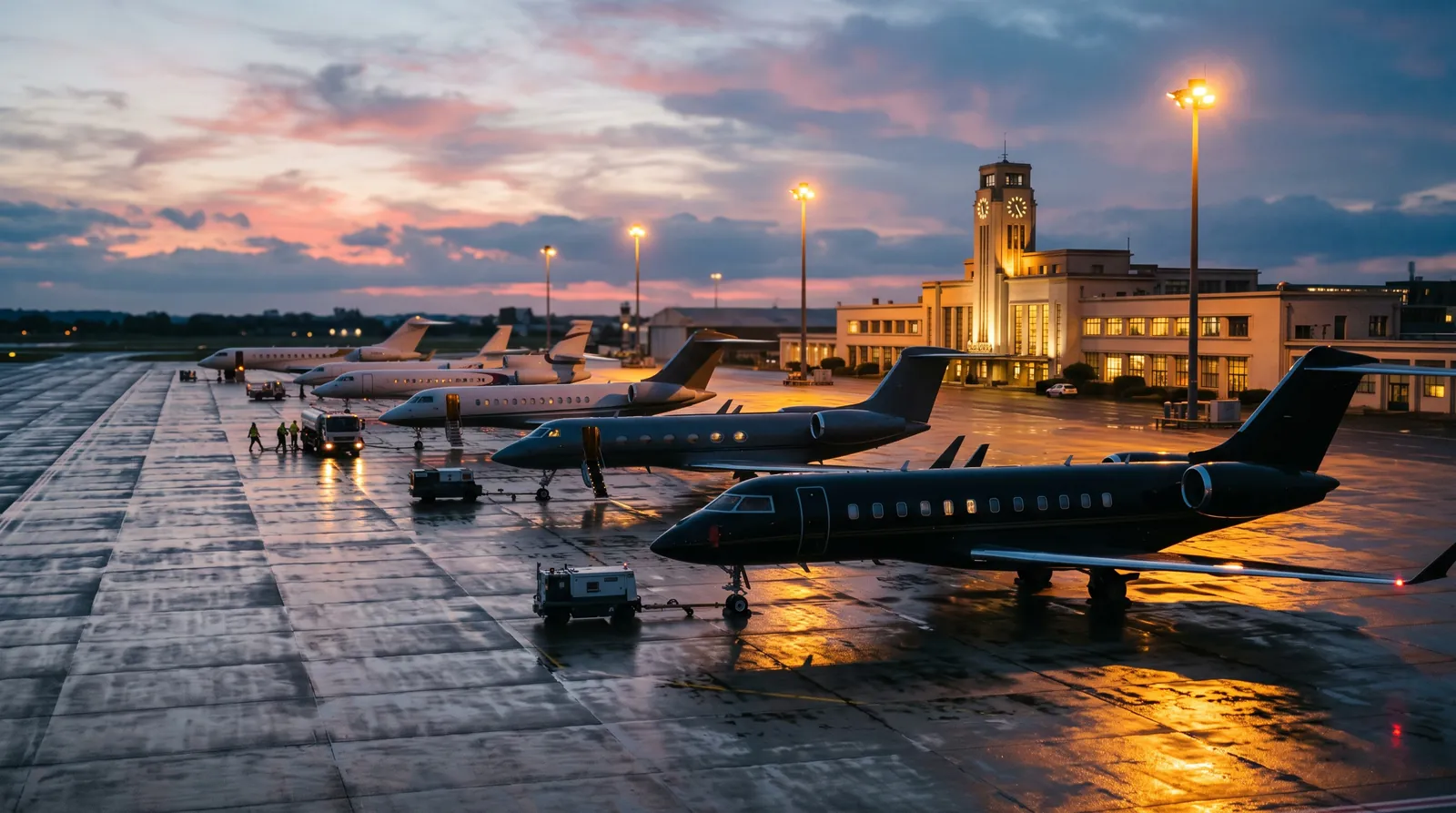
Geneva's runway, 04/22, is 3,900 m long and 50 m wide, long enough for any business jet at full weight and for the long-haul airliners that also use it. Runway length is never the limiting factor here; space on the ground is. Every business and general aviation movement needs prior permission from the airport, requested through the handling agent, and parking in the business aviation area is limited. In peak periods that permission is the moment a trip is really confirmed, so do not treat a booked aircraft as a booked arrival until the operator says the movement and the parking are approved.
Opening hours and the midnight line
Geneva operates from 06:00 to midnight. Between midnight and 06:00 a curfew applies, and the airport can admit only a handful of late movements in exceptional circumstances, such as a delay caused by weather or a medical emergency on board. Communes around the airport have pressed for tighter night rules, and late-evening movements are closely watched. The safe plan is to treat the last hours of the evening as a scarce resource and to schedule returns, particularly in winter, well before midnight.
Winter weekends and de-icing
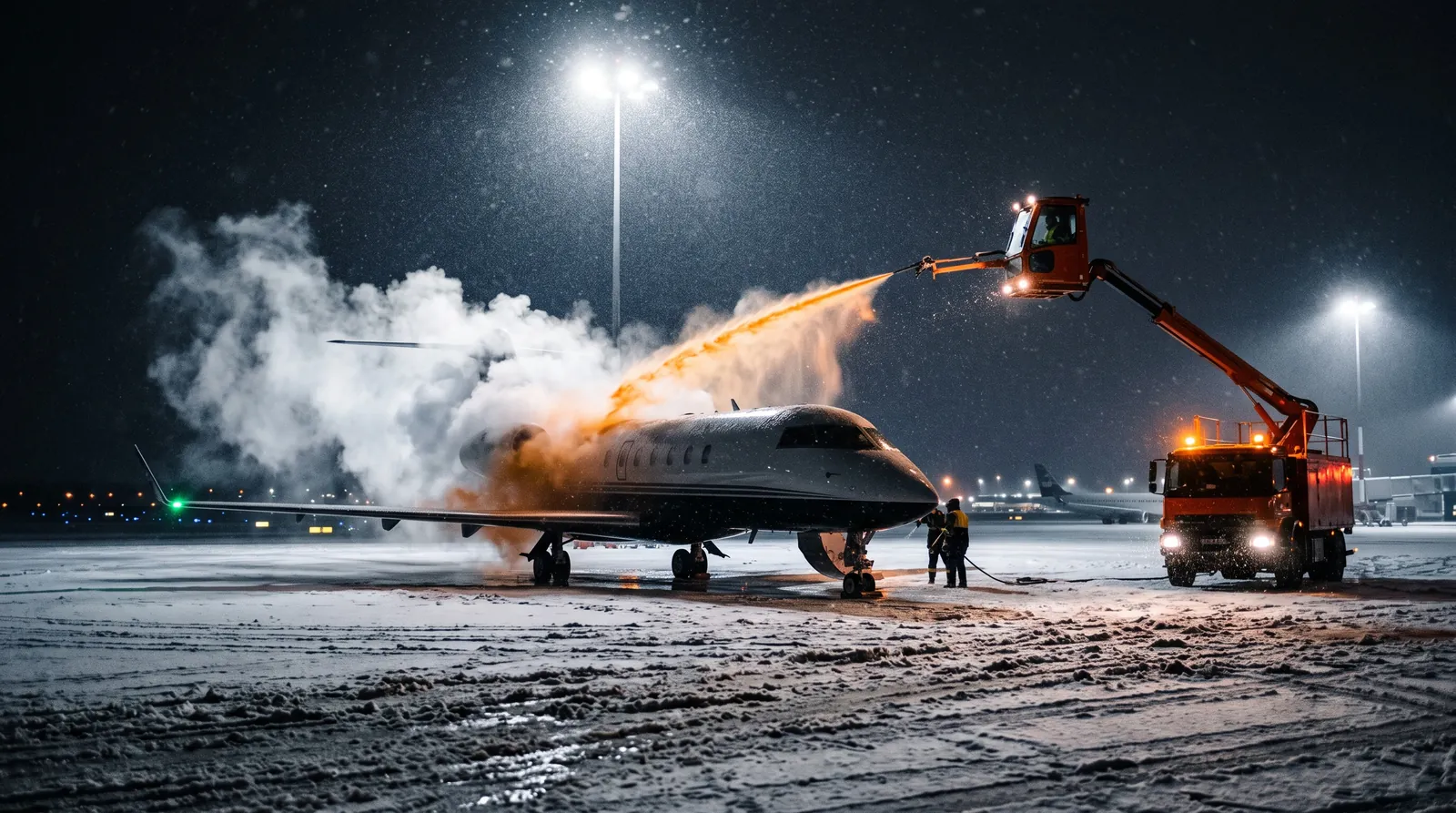
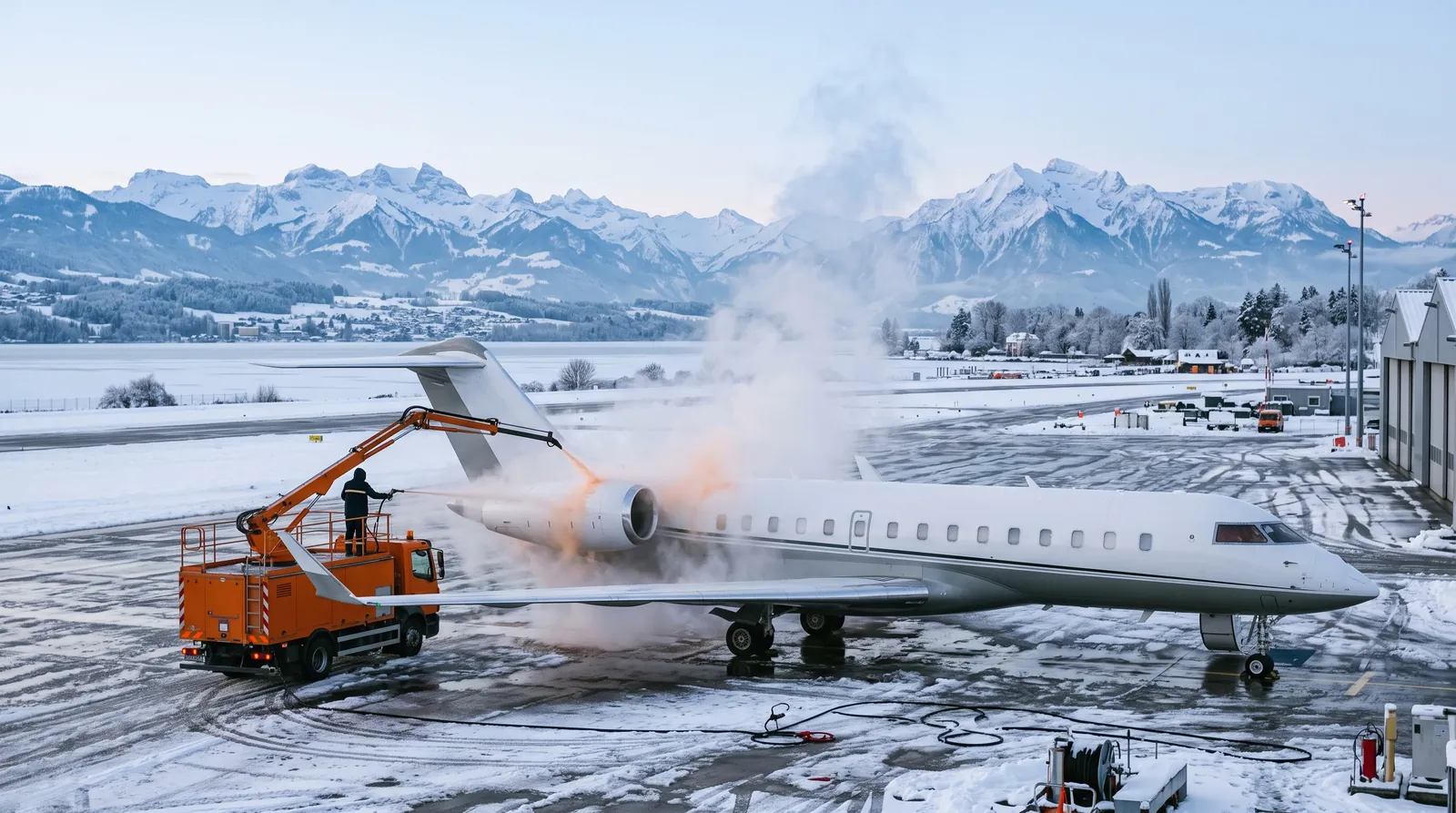
In the ski season, Saturday is changeover day in many resorts, and Geneva's traffic follows it. Arrivals bunch on Friday evening and Saturday, departures on Saturday and Sunday, and ski charters and business jets compete for the same runway, stands and de-icing capacity. On a snowy morning each departing aircraft may need de-icing and anti-icing fluid, which takes time and is usually billed separately at cost. The charter contract small print explains how operators pass on de-icing.
- Allow extra time at the business terminal on snowy days; the de-icing queue sets the real departure time.
- Travel midweek where you can. Parking is easier to confirm and the terminal is quieter.
- Tell the operator the number and size of ski bags and boot bags in advance, so the aircraft is chosen with the hold in mind.
The French sector
Geneva airport lies against the French border. A 1960s agreement between France and the Canton of Geneva created a French sector that lets travellers move between the airport and the Pays de Gex without passing through Swiss territory. It belongs to the airline terminal, and since Switzerland joined the Schengen area routine passport checks between the two countries have gone. For a private arrival, whether the French side plays any part depends on the handler and on customs arrangements, so ask in advance rather than assume. Switzerland is outside the EU customs union, so customs rules on goods apply whichever way you leave.
On to the mountains
Chamonix and Megève are the closest of the major resorts by road. Verbier, Crans-Montana and the Three Valleys are longer drives, which is where helicopter transfers earn their place when the weather allows. Mountain weather can keep helicopters on the ground, so a road plan is always the fallback.
Alpine helicopter transfers covers flight times and weather holds, and Courchevel by private jet compares Geneva with Chambéry for the Three Valleys. For long-haul arrivals, Range Check shows which jets reach Geneva nonstop from a given departure airport.
Questions
What are Geneva Airport's opening hours for private jets?
Geneva operates from 06:00 to midnight, with a curfew from midnight to 06:00 and only narrow exceptions for weather delays or medical emergencies. Every business aviation movement also needs prior permission from the airport.
Do I need permission to fly a private jet into Geneva?
Yes. All business and general aviation flights need a mandatory airport movement permission, which the handling agent requests. Parking is limited, so the operator should confirm both the movement and the parking before the trip.
How do private jet passengers get from Geneva to the ski resorts?
By car or by helicopter. Chamonix and Megève are relatively close by road, while Verbier, Crans-Montana and the Three Valleys are longer drives where a helicopter saves time when the weather allows.
Can I leave Geneva Airport on the French side?
The French sector was built for the airline terminal and links the airport with the Pays de Gex without crossing Swiss territory. For a private flight, ask the handler in advance whether a French-side exit is possible.
Figures checked 19 October 2026. Prices are indicative and never a quote. Seen something out of date? Tell the editors.