
APTAirports · Profile
St. Barths Airport: A Short Strip and a Famous Approach
St. Barths has a 646 m runway between a hill and a beach, an approach over the Col de la Tourmente and a check-out for every pilot. Why jets stay away and how travellers connect.
3 min readRolavia editors
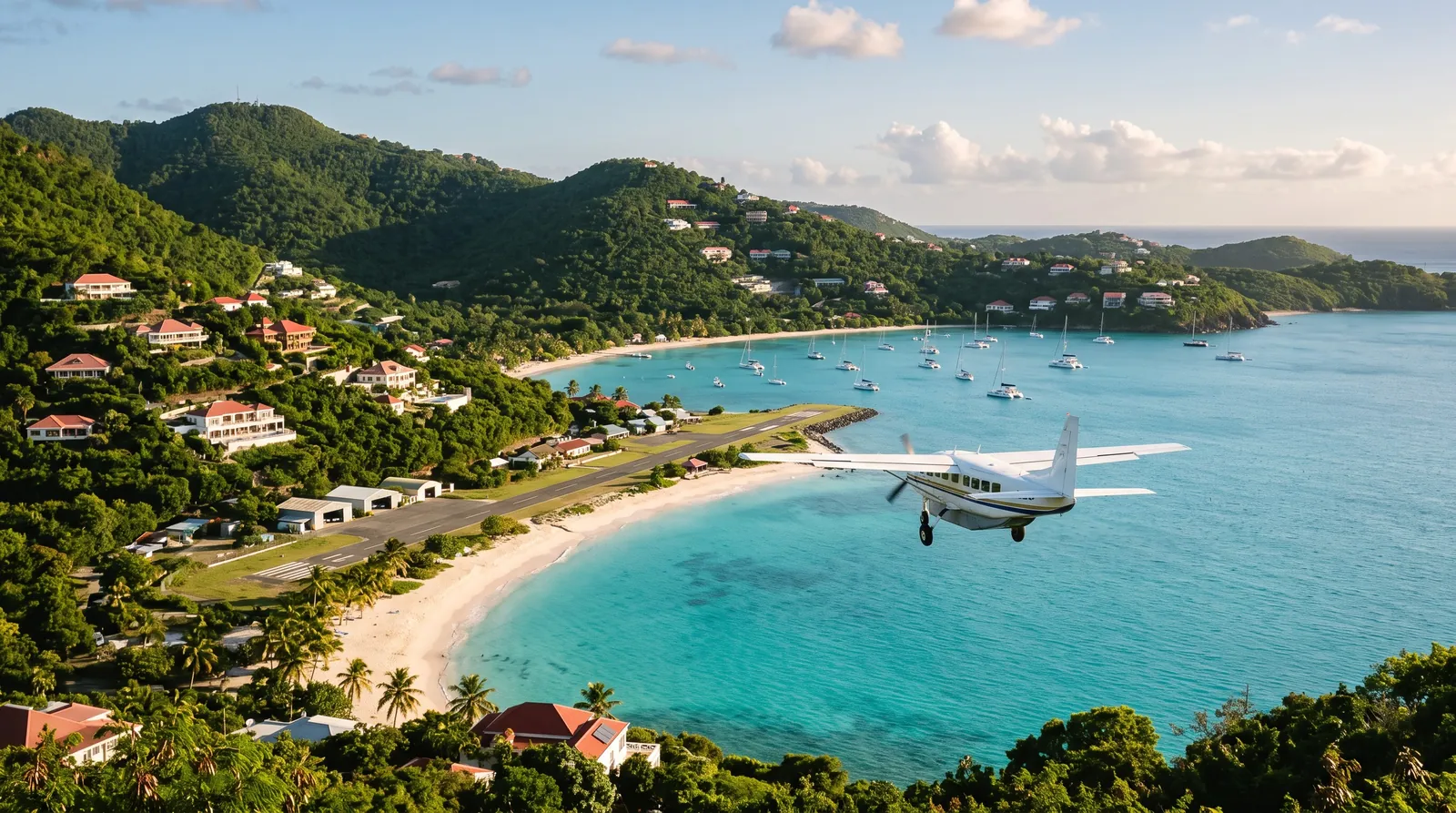
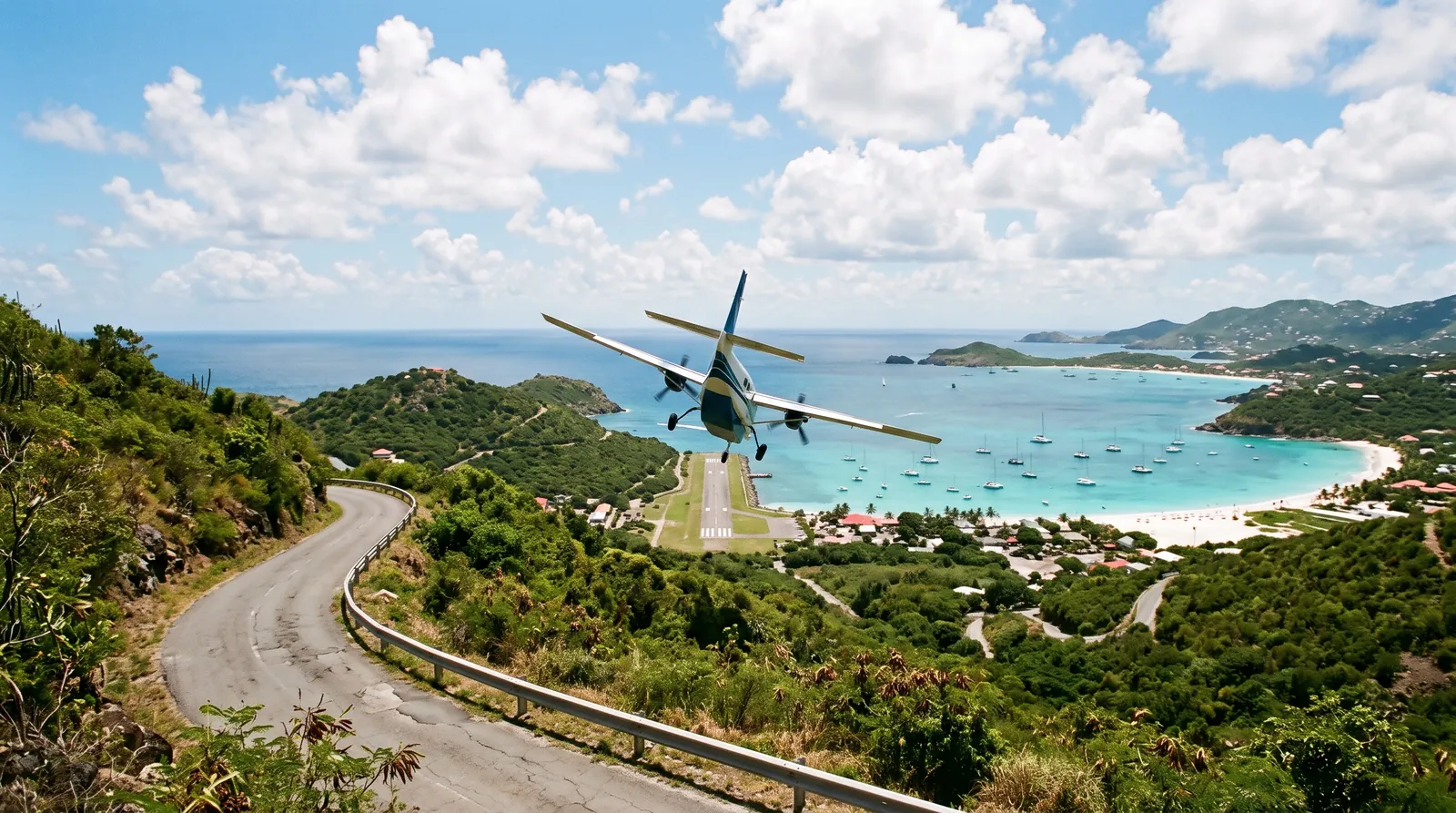
St. Barths airport is a 646 m runway squeezed between a hill and a beach at St-Jean, and its approach is one of the most demanding in the Caribbean. Aircraft arriving from the west cross a ridge, the Col de la Tourmente, at very low height and then descend steeply onto the runway, and every pilot needs a specific check-out for the airport. The runway is far too short for business jets, so private flyers land on a longer runway nearby, usually Princess Juliana on St. Maarten, and finish with a short hop by turboprop or helicopter.
Two names, one short runway
The airport was long known as Gustaf III, after the Swedish king who acquired the island in 1784, and in 2015 it was renamed in honour of Rémy de Haenen, the aviator who made the first landing on the island. Its runway, 10/28, is 646 m long and only 18 m wide. It slopes gently: according to the French accident investigation bureau, the BEA, the threshold of runway 10 sits at 49 ft and the threshold of runway 28 at 7 ft, an average gradient of about 2 per cent. At the eastern end the runway stops at the shore of St-Jean bay.
The approach over the col
Runway 10 is the preferred landing direction, with the approach from the west. It crosses the Col de la Tourmente, a ridge at about 130 ft with a roundabout on the road over the top, roughly 310 m before the aiming point on the runway. Because of the terrain, aircraft follow a steep path on final, and the hills to the north, west and south-east produce turbulence on the approach.
Take-offs towards the hill, on runway 28, are prohibited, and a go-around from an approach to runway 28 is only allowed with an early right turn, before a decision point abeam Eden Rock. The airport operates by day and under visual flight rules only.
Who may fly in: pilots and operators
St. Barths is a restricted-use aerodrome, reserved for aircraft whose characteristics and performance suit it and for authorised pilots. The official visual approach chart requires a pilot to show recognised aptitude on the aircraft type or class, issued by an instructor, before serving the airport. Commercial operators must also submit a file showing that their landing performance fits the available runway, which the French civil aviation authority, DSAC, must approve.
A BEA report describes one operator's programme: a day of theory on the airport's particularities, then landings with an instructor and no passengers, a set number of supervised commercial landings before a captain may carry passengers, and an annual refresher.
Which aircraft you will fly on
- Single-engine turboprops: the Cessna Grand Caravan and the Pilatus PC-12 are familiar types on the hop from St. Maarten.
- Twin-engine utility aircraft: the de Havilland Canada Twin Otter and the Britten-Norman Islander also serve the island.
- Jets: none. Even business jets built for short fields need considerably more runway than 646 m, before the terrain is taken into account.
These aircraft are small and weight-limited. Soft bags load far more easily than hard cases, and the operator needs passenger weights and the number and size of bags in advance.
Connecting from St. Maarten
Princess Juliana airport on St. Maarten is the usual arrival point for long-range jets, and the hop to St. Barths takes about 15 minutes in the air. The connection works best when it is arranged before departure, with the turboprop or helicopter booked against the jet's arrival time. Because St. Barths closes at the end of the day, a long-haul arrival late in the afternoon may mean a night on St. Maarten.
St. Barths by private jet covers the FBO and the high season peaks, helicopter transfers explained covers the rotor option, and Range Check shows which aircraft reach St. Maarten nonstop from your departure airport.
Questions
Can private jets land at St. Barths?
No. The runway is 646 m long and the airport is restricted to suitable aircraft and authorised pilots, which rules out business jets. Jets land at Princess Juliana on St. Maarten, and passengers continue by turboprop or helicopter.
How long is the runway at St. Barths airport?
Runway 10/28 is 646 m, or 2,119 ft, long and 18 m wide. It slopes gently down towards the beach at its eastern end, with an average gradient of about 2 per cent.
Why do pilots need special training for St. Barths?
The approach crosses the Col de la Tourmente at low height, descends steeply and often meets turbulence, onto a short runway that ends at the beach. The official chart requires recognised aptitude issued by an instructor, and commercial operators need DSAC approval.
How long is the flight from St. Maarten to St. Barths?
About 15 minutes in the air from Princess Juliana airport, usually in a Cessna Grand Caravan, a Pilatus PC-12, a Twin Otter or a similar small aircraft.
Figures checked 19 October 2026. Prices are indicative and never a quote. Seen something out of date? Tell the editors.