
DSTDestinations · Guide
St. Barths by Private Jet: St. Maarten, Then the Short Hop
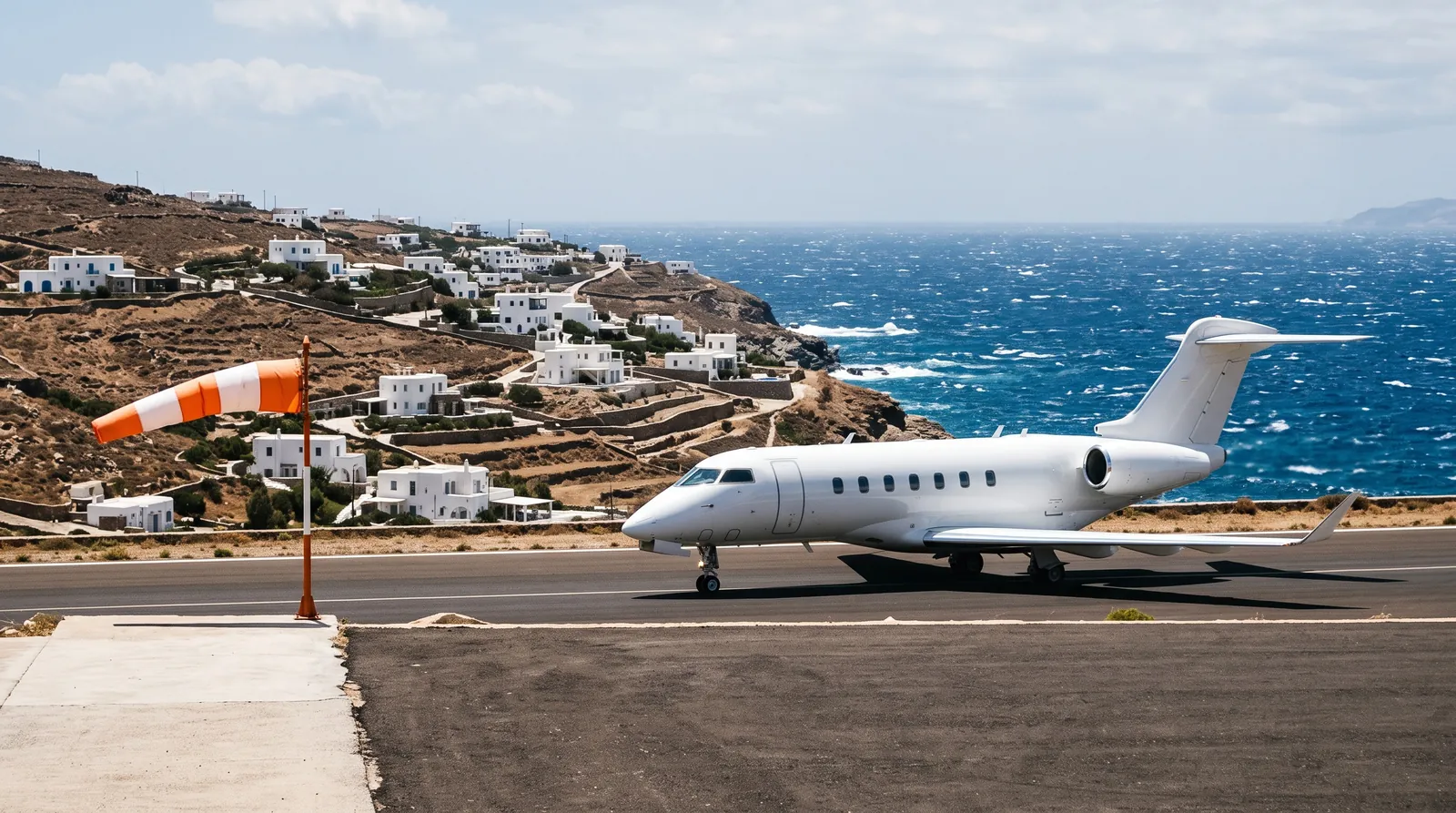
Business jets cannot land on St. Barths. The standard route is a jet into Princess Juliana on St. Maarten, then about 15 minutes by turboprop, planned around daylight and the holiday peak.
4 min readRolavia editors
Nobody flies a business jet into St. Barths. The island's Gustaf III airport has a 646 m (2,119 ft) runway, a steep approach over a hill and a ramp built for small turboprops, so the standard route is a long-range or midsize jet into Princess Juliana on St. Maarten, then a hop of about 15 minutes across the water by turboprop or helicopter. Done well, the change takes well under an hour. Done badly, in Christmas week, it can take the whole afternoon.
Princess Juliana: the gateway
Princess Juliana International (TNCM) is on the Dutch side of St. Maarten. Its single runway, 10/28, is 2,300 m (7,546 ft) long at an elevation of 14 ft (4 m), and the approach to runway 10 crosses Maho Beach at low height. Private flights are handled in a general aviation terminal west of the main passenger building, where customs and immigration take place. Prior permission is required: landing clearance and slot approval are arranged in advance through the handler.
From Europe this is a long-range trip. London to St. Maarten is about 3,560 nm on the great circle and Paris a little further, which puts a nonstop flight in the hands of large-cabin, long-range aircraft once winds and reserves are counted. From New York it is about 1,470 nm, comfortably within the range of super midsize jets. The charter cost estimator gives distance, flight time and an indicative price band for both.
The hop to St. Barths
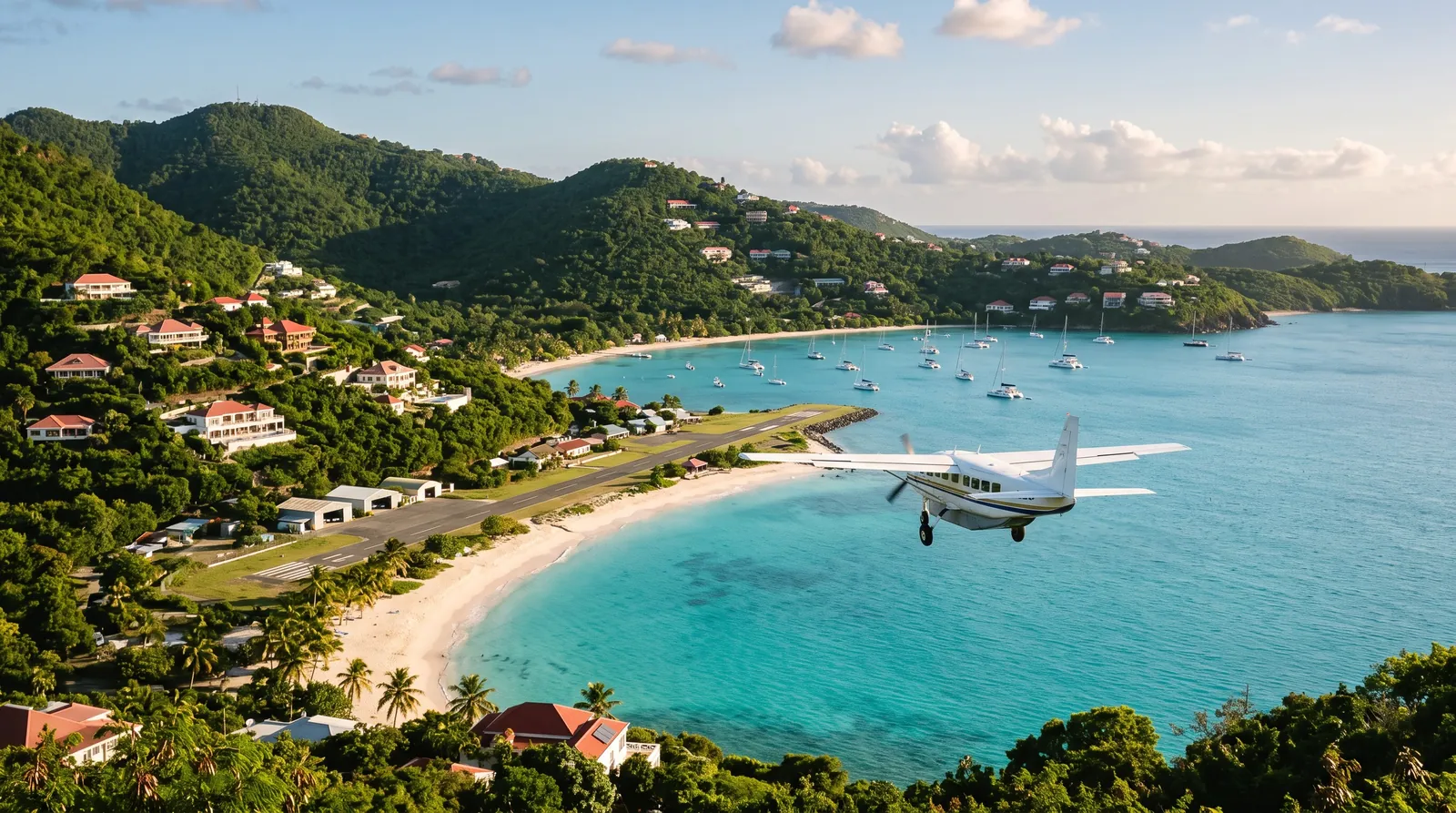
The two airports are about 17 nm apart. The scheduled and charter turboprops that shuttle between them, mainly Twin Otters, Cessna Grand Caravans and Pilatus PC-12s, take around 15 minutes, and the largest type that lands regularly is the 19-seat Twin Otter. Helicopters fly the crossing too, useful for a small group with light bags. By sea, the ferry from Philipsburg takes about 45 minutes and from Marigot about an hour, which is pleasant for a day trip but a long end to a transatlantic flight.
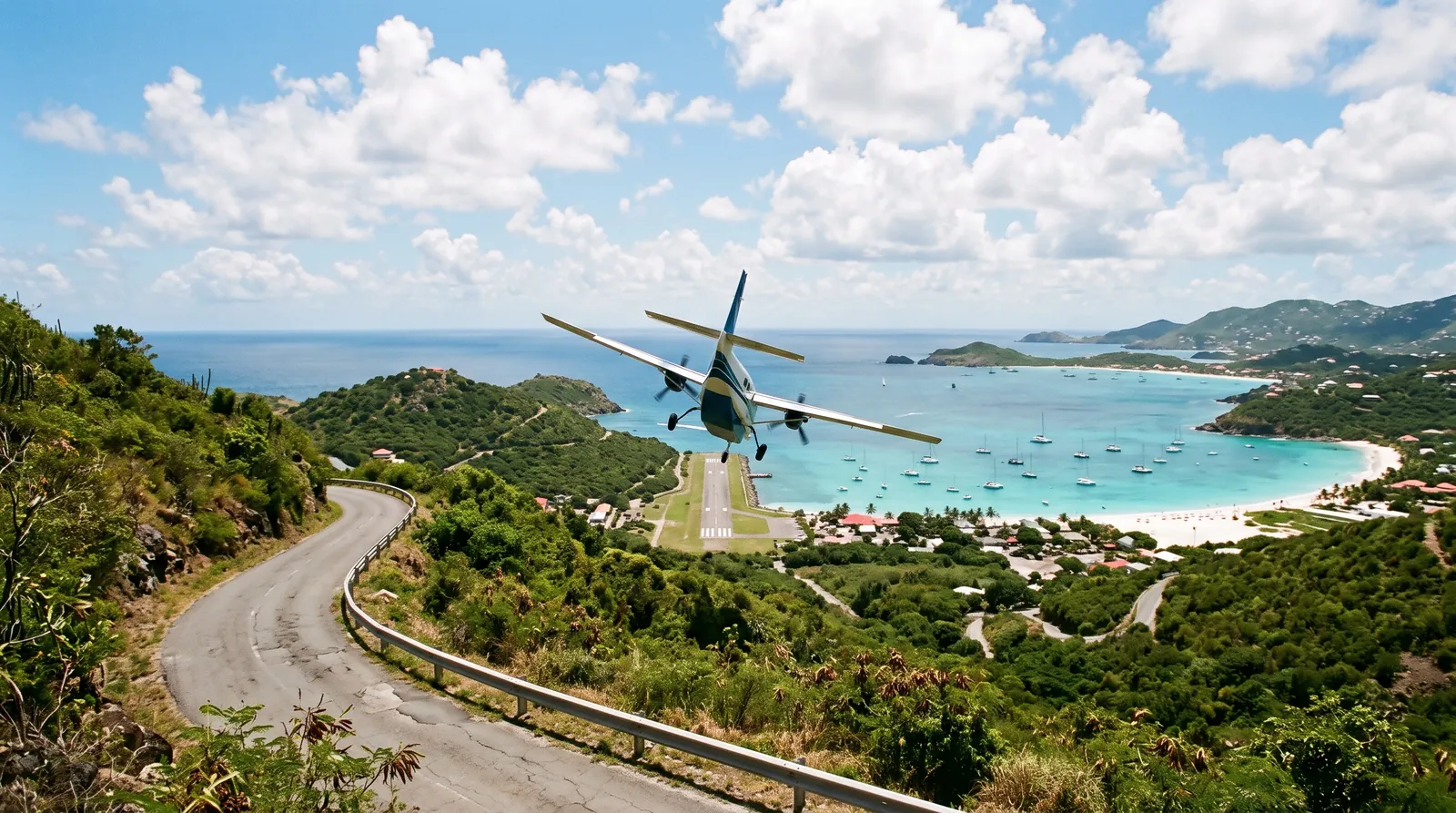
Gustaf III (TFFJ) has one runway, 10/28, sloping gently towards the sea. Arrivals on runway 10 come in steeply through a gap in the hills and over a roundabout on the road above the threshold. Pilots must be trained and checked specifically for the airport and re-evaluated every six months. The ramp has 15 marked stands and no fuel service, and in busy periods an aircraft should not occupy a stand for more than ten minutes. The St. Barths airport profile covers the approach in more detail.
Daylight is the real deadline
Gustaf III has no runway lighting and operates in daylight only, closing shortly after sunset, which in winter means around six in the evening. Medical flights are the only exception. Everything else has to be on the ground before then, and that shapes the whole day:
- Plan the long-range arrival into St. Maarten for the morning or early afternoon, so there is margin for a late slot, a queue at immigration or a weather delay.
- If the jet will land after mid-afternoon, book a night on St. Maarten and make the hop the next morning rather than racing the sunset.
- Strong crosswinds or low cloud can stop operations at short notice. Keep the ferry or a night on St. Maarten as the fallback.
- Send passport details and baggage dimensions to the operator early. Turboprop holds are small, and large hard cases may need to follow on a later flight.
Christmas and New Year
High season on St. Barths runs from late November through March, and the peak within it is the fortnight around Christmas and New Year. Princess Juliana's busiest stretch for private jets has historically been 20 to 31 December, and in past seasons the airport has suspended long-term private aircraft parking for lack of space. Aircraft refused parking drop their passengers, reposition to another island and come back for the return. On St. Barths itself, the airport has logged more than 280 movements in a single day at the start of January.
For those dates, ask for parking and slots in St. Maarten as early as the handler allows, consider arriving before Christmas week, and confirm the connecting flight with passenger names and baggage weights before the jet departs. Empty legs appear in both directions as aircraft reposition, though rarely on the exact dates you want. The FBO arrival checklist covers documents and timing at the general aviation terminal.
Questions
Can a private jet land on St. Barths?
No. Gustaf III airport has a 646 m runway, a steep approach over a hill and pilots who must be specially trained and checked for it. The largest type that lands regularly is the 19-seat Twin Otter, so jets land on St. Maarten and passengers continue by turboprop or helicopter.
How long is the flight from St. Maarten to St. Barths?
About 15 minutes by turboprop over roughly 17 nm. Allow extra time for the transfer between the general aviation terminal and the connecting aircraft, and for formalities on arrival.
What time does St. Barths airport close?
It operates in daylight only and closes shortly after sunset, which in winter is around six in the evening. Plan the jet's arrival on St. Maarten for the morning or early afternoon, or stay a night and fly across the next day.
Figures checked 19 October 2026. Prices are indicative and never a quote. Seen something out of date? Tell the editors.