
INTJet Interiors · Explainer
Cabin Altitude, Humidity and Jet Lag: Why Newer Jets Feel Better
What cabin altitude is, the published figures for older and newer business jets, and how humidity, fresh air, noise and light affect the way you feel when you arrive.
3 min readRolavia editors
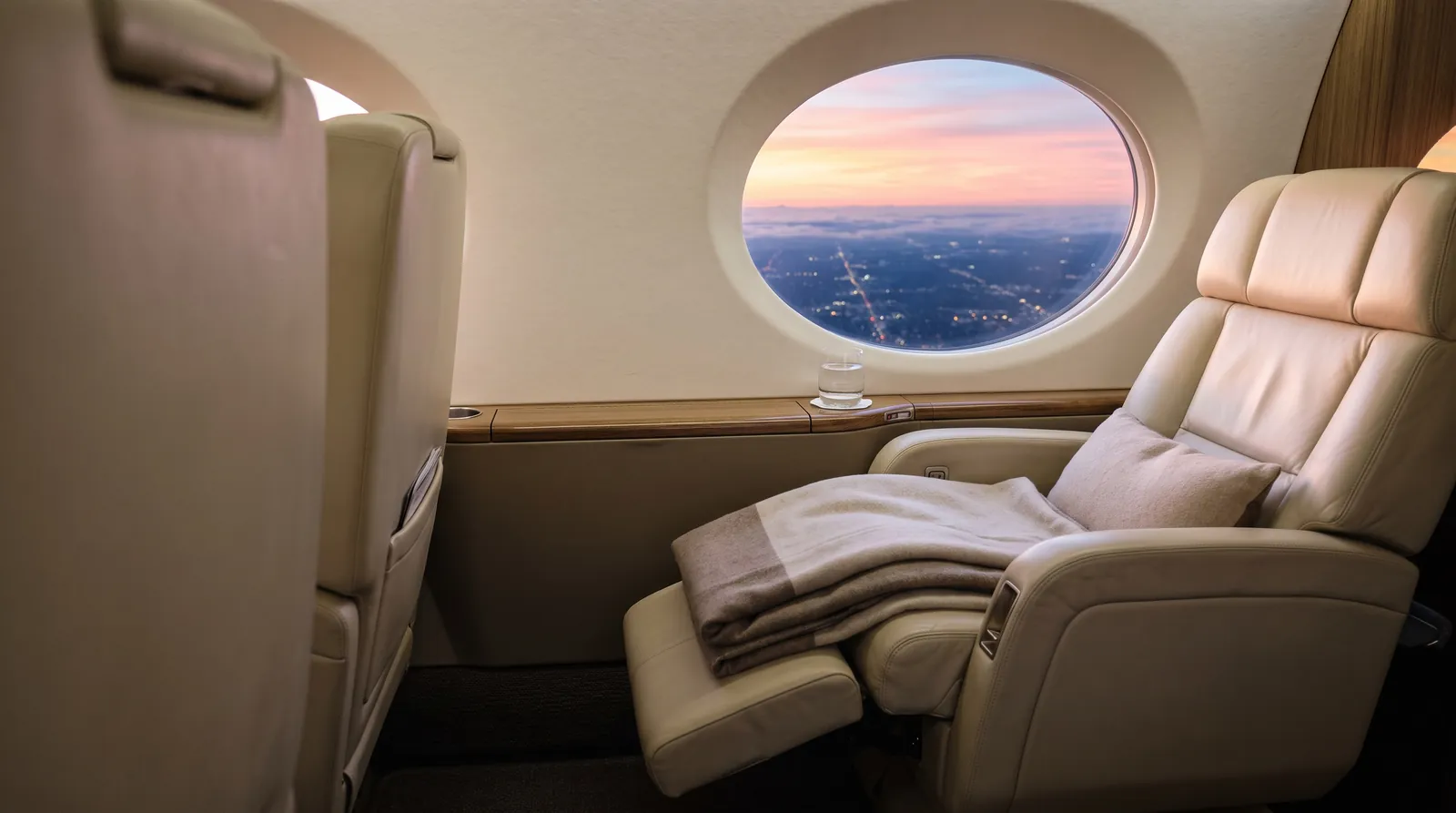
Cabin altitude is the height at which you would find the same air pressure outside as you have inside the cabin. A jet cruising at 41,000 ft keeps its cabin at a pressure equivalent to a few thousand feet. Certification rules cap that at 8,000 ft in normal operation. The newest long-range business jets publish figures below 3,000 ft at 41,000 ft. A lower cabin altitude means more oxygen pressure in every breath, and together with humidity, fresh air, noise and light it shapes how you feel on arrival.
What cabin altitude is
The cabin is pressurised by pumping in compressed air and letting it out through a controlled outflow valve. The difference between the pressure inside and outside is limited by the strength of the fuselage, so a stronger structure allows a lower cabin altitude at the same flight level. That is why every published figure comes with a reference altitude: the higher the aircraft flies, the higher its cabin altitude. Under the transport category rules in the US and Europe, the cabin pressure altitude may not exceed 8,000 ft under normal operating conditions. How to read these figures is also covered in our guide to aircraft spec sheets.
Older and newer jets in numbers
| Aircraft | Cabin altitude | At flight altitude |
|---|---|---|
| Embraer Phenom 300E | 6,600 ft (maximum) | 45,000 ft |
| Cessna Citation Latitude | 5,950 ft | 45,000 ft |
| Bombardier Challenger 3500 | 4,850 ft | 41,000 ft |
| Gulfstream G700 | 2,840 ft | 41,000 ft |
| Bombardier Global 8000 | 2,691 ft | 41,000 ft |
The reference altitudes differ, so the figures are not strictly like for like: the two light and midsize jets are quoted at their 45,000 ft ceiling. Airliners commonly cruise with cabin altitudes somewhere between about 5,000 and 8,000 ft. Boeing designed the 787 around a maximum of 6,000 ft, and older business jet designs also tend to sit higher than the latest large cabins. For the aircraft behind the numbers, see our G700 profile and our Global 8000 profile.
Why it matters: oxygen and comfort
At a higher cabin altitude there is less oxygen pressure, so the oxygen saturation of the blood falls slightly. For healthy passengers an 8,000 ft cabin is safe. Comfort is another matter. A chamber study of 502 adults, published in the New England Journal of Medicine in 2007 and partly funded by Boeing, found that oxygen saturation fell as the simulated altitude rose and that discomfort was greater at 7,000 to 8,000 ft than at lower altitudes, with differences appearing after three to nine hours. The rate of acute mountain sickness did not differ significantly between altitudes. The authors suggested that a cabin altitude of 6,000 ft or lower would reduce discomfort. Passengers with heart or lung conditions should take medical advice before long flights whatever the aircraft.
Humidity
Air at cruising altitude is extremely dry, and cabin humidity is typically very low, often below 20 per cent. The effects are dry eyes, skin, nose and throat rather than dehydration of the body as such. With fewer people on board breathing out moisture, a lightly loaded cabin can be drier still. Some business jets can be specified with humidification systems, a feature to ask about on very long flights. Simple measures help too: water, moisturiser, a saline nasal spray and glasses instead of contact lenses.
Fresh air, noise and light
- Fresh air. Many aircraft mix outside air with filtered, recirculated air. Gulfstream says the G700 cabin uses 100 per cent fresh air, replenished every two to three minutes. Bombardier's Global 8000 uses a HEPA filter system that it calls Pũr Air.
- Noise. A quieter cabin reduces fatigue and makes sleep easier. Published sound levels are measured in different ways, so compare them with care.
- Light. The body clock is set mainly by light. Circadian cabin lighting, such as Bombardier's Soleil system, shifts colour and brightness towards destination time; see our look at cabin design.
Jet lag: what a better cabin can and cannot do
Jet lag is the mismatch between your body clock and the time zone you land in, and it comes from crossing time zones, not from cabin altitude. What a better cabin reduces is travel fatigue: the headache, dryness and heaviness that make jet lag feel worse. The practical approach combines both: choose departure times that let you sleep on board during the destination night, use the cabin lighting, drink water, go easy on alcohol, and get daylight at the right time after landing.
Questions
What is a good cabin altitude for a private jet?
Lower is more comfortable. The rules allow up to 8,000 ft. The light and midsize jets in our table publish 5,950 to 6,600 ft at 45,000 ft, and the newest long-range jets publish figures below 3,000 ft at 41,000 ft. Always check the flight altitude each figure refers to.
Do private jets reduce jet lag?
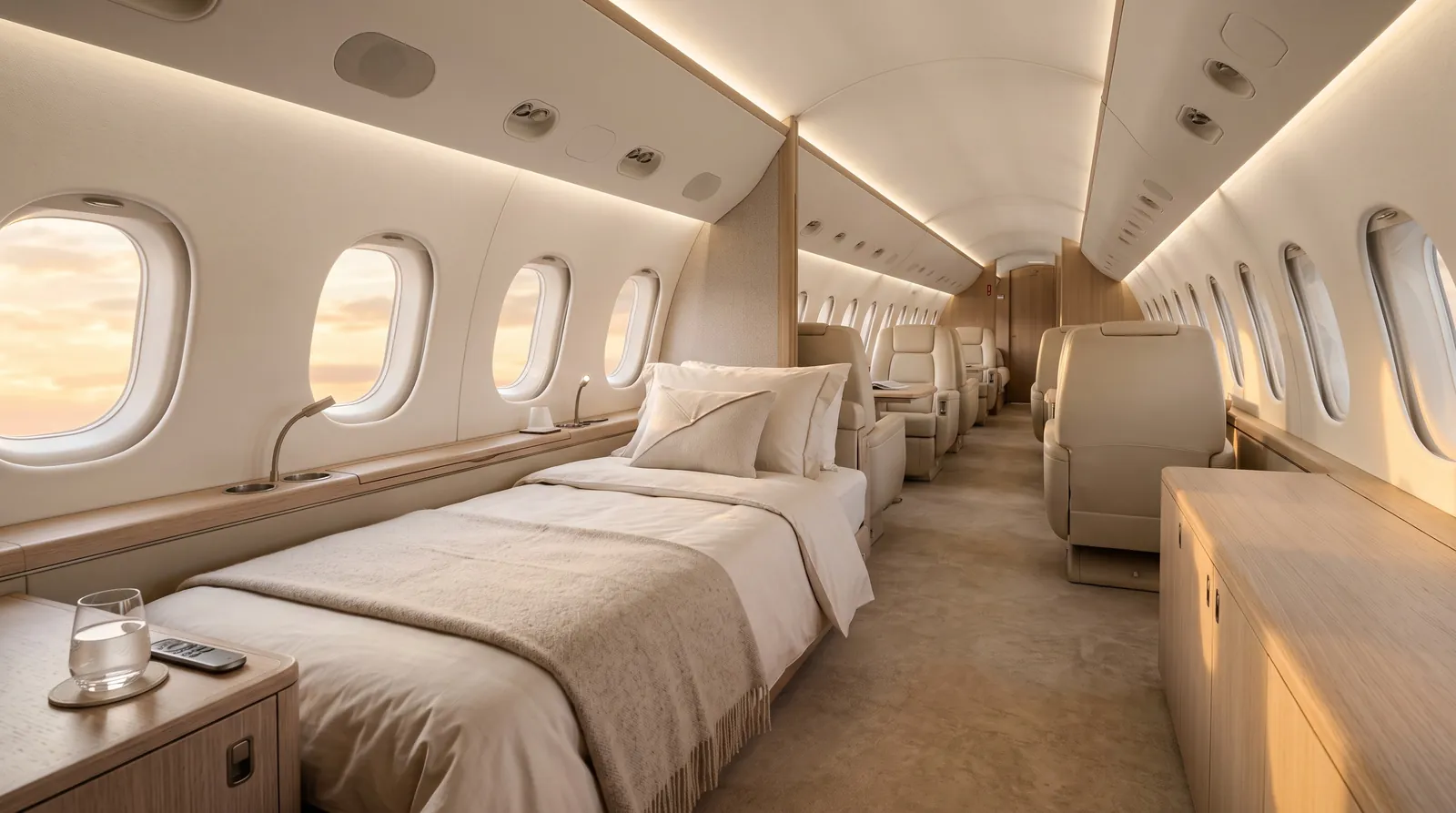
Not directly, because jet lag comes from crossing time zones. A low cabin altitude, a quiet cabin, a proper bed and circadian lighting can reduce travel fatigue and make it easier to sleep at the right time, which helps you adjust faster.
Why is the air on aircraft so dry?
Cabin air is largely outside air drawn in at high altitude, where it holds very little moisture, and it is replaced frequently. Humidity in the cabin is therefore typically very low, often below 20 per cent, which dries the eyes, skin and nose.
Figures checked 19 October 2026. Prices are indicative and never a quote. Seen something out of date? Tell the editors.