
ACFAircraft · Profile
Bombardier Challenger 3500: The Super Midsize Benchmark
A 3,400 nm range, a stand-up cabin and seats for up to ten: why the Challenger 3500 and its predecessors became the reference point for super midsize jets and charter.
3 min readRolavia editors
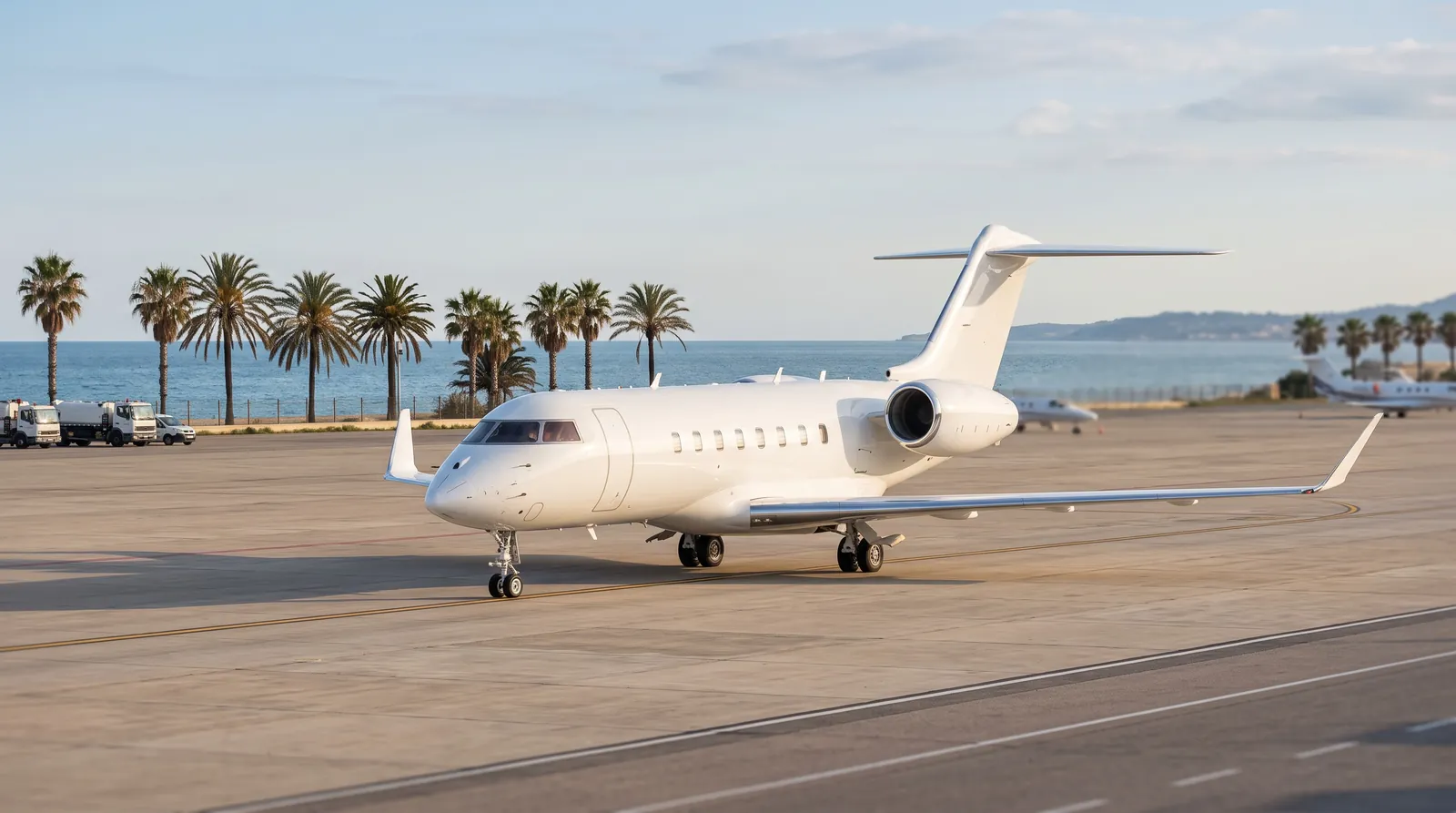
The Challenger 3500 is the reference point of the super midsize class. Bombardier quotes a range of 3,400 nm with four passengers, enough to cross the United States with a wide margin and, on paper, to link London and New York. The cabin stands 6 ft high and seats up to ten, and the family it belongs to, which began with the Challenger 300, passed 1,000 deliveries in February 2025. That record, more than any single brochure figure, is why other jets in the class are measured against it.
A long line
The Challenger 300 entered service in 2004 and was followed by the Challenger 350. The 3500, unveiled in September 2021 and in service from September 2022, kept the proven airframe and Honeywell engines and reworked the cabin. Bombardier delivered the 100th Challenger 3500 in October 2024 and the 200th in July 2026. For buyers and charter clients, such a large fleet means well-understood maintenance, a deep pool of trained crews and, in charter, a better chance of a like-for-like substitute if an aircraft goes unserviceable.
The cabin
The cabin is 25 ft 2 in (7.68 m) long excluding the baggage compartment, 6 ft 0 in (1.83 m) high and 7 ft 2 in (2.19 m) wide. Bombardier certifies up to ten passengers; many aircraft are laid out with eight seats in two club groups, and layouts with a divan reach the full ten. Baggage volume is 106 cu ft (3 m³).
The most important change against the Challenger 350 is pressurisation. Cabin altitude is 4,850 ft at 41,000 ft, which Bombardier puts at 31 per cent lower than its predecessor. The 3500 also brought Bombardier's Nuage seats, with a reclined zero-gravity position, into the super midsize class, together with voice control for lighting, temperature and entertainment.
Performance
Bombardier's range assumption is slightly stricter than many: 3,400 nm with four passengers and two crew, NBAA IFR reserves, Mach 0.77 and a takeoff temperature of ISA plus 15°C. High-speed cruise is Mach 0.82 and top speed Mach 0.83. Maximum operating altitude is 45,000 ft, and the initial cruise altitude at maximum weight 43,000 ft. Takeoff distance at maximum weight, sea level and ISA is 4,835 ft (1,474 m), and typical landing distance 2,364 ft (721 m), which opens most business airports and many smaller regional ones.
| Item | Figure |
|---|---|
| Range | 3,400 nm (6,297 km), 4 passengers, 2 crew, NBAA IFR reserves, ISA plus 15°C takeoff, Mach 0.77 |
| High-speed cruise | Mach 0.82 |
| Top speed | Mach 0.83 |
| Maximum passengers | Up to 10 |
| Cabin length | 25 ft 2 in (7.68 m), excluding baggage compartment |
| Cabin height | 6 ft 0 in (1.83 m) |
| Cabin width | 7 ft 2 in (2.19 m) |
| Baggage volume | 106 cu ft (3 m³) |
| Takeoff distance | 4,835 ft (1,474 m), maximum weight, sea level, ISA |
| Landing distance | 2,364 ft (721 m), sea level, ISA, typical weight |
| Cabin altitude | 4,850 ft at 41,000 ft |
| Maximum altitude | 45,000 ft |
| Engines | Two Honeywell HTF7350, 7,323 lb thrust each |
| Entry into service | September 2022 |
Transcontinental and transatlantic
- New York (Teterboro) to Los Angeles (Van Nuys): about 2,130 nm great circle, comfortably inside the range.
- Seattle to New York: about 2,080 nm.
- Paris to Dubai: about 2,830 nm.
- London to New York: about 3,000 nm. Eastbound with a tailwind this is routine; westbound into strong winter headwinds with a full cabin, operators may plan a fuel stop.
Within Europe, the Challenger 3500 reaches almost anywhere nonstop, including the Canary Islands, the Gulf and much of North Africa from northern European bases. The Range Check tool shows the circle from your own departure airport.
Why super midsize is the charter sweet spot
Super midsize jets give groups of six to eight most of what a large cabin offers: standing headroom, a proper lavatory, room for luggage and the range for a transcontinental or, in good conditions, a transatlantic trip. They do it with smaller engines, lower fuel burn and lower fees than a large-cabin jet, and they use shorter runways. For many trips that is the point where comfort and cost balance best, which is why the class features so prominently in charter fleets and on charter quotes.
The alternatives depend on the trip. The Citation Latitude offers a similar 6 ft cabin height on a narrower fuselage and shorter range, at lower cost; a large-cabin jet adds width and range for longer sectors. The private jet categories article sets out the classes, and the Aircraft Finder matches them to passengers, distance and runway.
Questions
How far can a Challenger 3500 fly?
Bombardier quotes 3,400 nm with four passengers, two crew and NBAA IFR reserves at Mach 0.77, assuming a takeoff at ISA plus 15°C. More passengers, faster cruise and headwinds reduce that figure.
Can a Challenger 3500 fly from London to New York nonstop?
The great circle distance of about 3,000 nm is inside the published range, and eastbound flights are routine. Westbound against strong winter headwinds with a full cabin, an operator may plan a fuel stop, so check with the operator for your date and load.
How many passengers does a Challenger 3500 seat?
Bombardier certifies up to ten passengers. Many cabins are laid out with eight seats in two club groups, while layouts with a divan reach ten.
What is the difference between the Challenger 350 and the Challenger 3500?
The 3500 keeps the proven airframe and engines but has a redesigned cabin, Nuage seats and voice-controlled cabin functions. Its cabin altitude of 4,850 ft at 41,000 ft is, according to Bombardier, 31 per cent lower than the Challenger 350's.
Figures checked 19 October 2026. Prices are indicative and never a quote. Seen something out of date? Tell the editors.